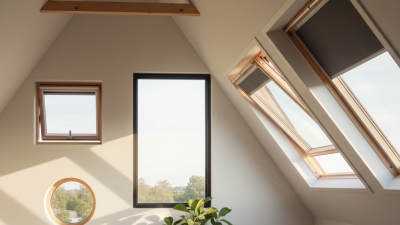
Flat roof lanterns can transform a dark extension into a bright, comfortable living space. Sunlight falls through the glazing, shifting across walls and floors throughout the day. Yet appearance is only one part of a sound roof design. Frame material, glazing performance, drainage, ventilation, and installation quality all affect the final result. This guide examines ten popular types, including fixed, opening, pyramid, rectangular, modular, and bespoke lanterns. Each option suits different roof sizes, budgets, thermal goals, and architectural styles.
Real-world performance depends on details that photographs rarely show. A slim aluminium frame may provide a crisp modern finish, while timber can bring warmth and traditional character. Opening lanterns may improve airflow during hot weather, but their mechanisms require careful maintenance. Low-emissivity glazing can reduce heat loss, although excessive solar gain may still make a room uncomfortable in summer. Roof pitch, flashing, seals, and water drainage deserve equal attention. Small installation errors can leave damp marks around the ceiling.
There is no universally best type.
The right choice depends on the building and its users. Experienced installers should assess structural strength, local weather exposure, cleaning access, and compatibility with the existing roof. Independent product documentation and clear warranty terms also matter. Some claims sound impressive but need evidence. This comparison aims to make those differences easier to judge, while acknowledging that design preferences and technical priorities sometimes conflict.
Flat roof lanterns vary through geometry, panel arrangement, and glass performance.
This classification is practical, but some designs overlap.
Glazing creates another important distinction. Clear glass maximises daylight and preserves sky views. Low-emissivity glass improves thermal performance. Solar-control glass limits summer overheating. Tinted glass reduces glare, although it can darken interiors. Opal or diffused glazing spreads light more evenly. Laminated glazing can improve safety and sound control. Frame depth, drainage, and roof loading also affect performance.
In real projects, visual appeal should not outrank heat balance. I have seen attractive lanterns create uncomfortable afternoon glare.
Tips: Compare room orientation, ceiling height, and ventilation before choosing a form. Ask for documented U-values and solar-control data. Check junction details carefully. Poor sealing can undermine excellent glazing. A simple sketch often reveals awkward shadows before installation.
The top ten types are single-glazed, double-glazed, triple-glazed, low-emissivity, solar-control, thermally broken aluminium, uPVC, timber, composite, and electrochromic lanterns. Their performance differs sharply. Industry rating data aligned with NFRC 100 and EN 673 commonly places modern double glazing near 1.0–1.6 W/m²K. Triple glazing can approach 0.6–1.0 W/m²K. Lower U-values generally reduce heat loss. However, frame design and installation still matter.
Visible light transmittance, or VLT, describes daylight entering the room. Clear double glazing may deliver approximately 70–80% VLT. Solar-control coatings often reduce this to about 35–65%. The choice affects glare near white floors, kitchen worktops, and screens. EN 410 evaluates VLT and solar factor, known as g-value. A g-value around 0.35–0.50 can limit summer heat, while clear glass may exceed 0.60. Berkeley Lab’s WINDOW simulations show that coatings, cavities, and framing can change results significantly.
Thermally broken aluminium usually improves edge performance. Timber and composite frames can offer useful insulation. Electrochromic glazing changes VLT and solar gain electronically, but costs and controls require careful checking. NFRC public rating data also shows that the tested whole-unit U-value can differ from centre-glass figures. This is often overlooked. My practical concern is simple: selecting the lowest U-value alone may create a dim, cold-looking space. Compare whole-lantern U-value, VLT, and g-value together. Ask for certified calculations, not optimistic brochure estimates.
What Are the Top 10 Types of Flat Roof Lanterns?
How EN 673 and EN 410 Data Explain Lantern Thermal and Light Performance
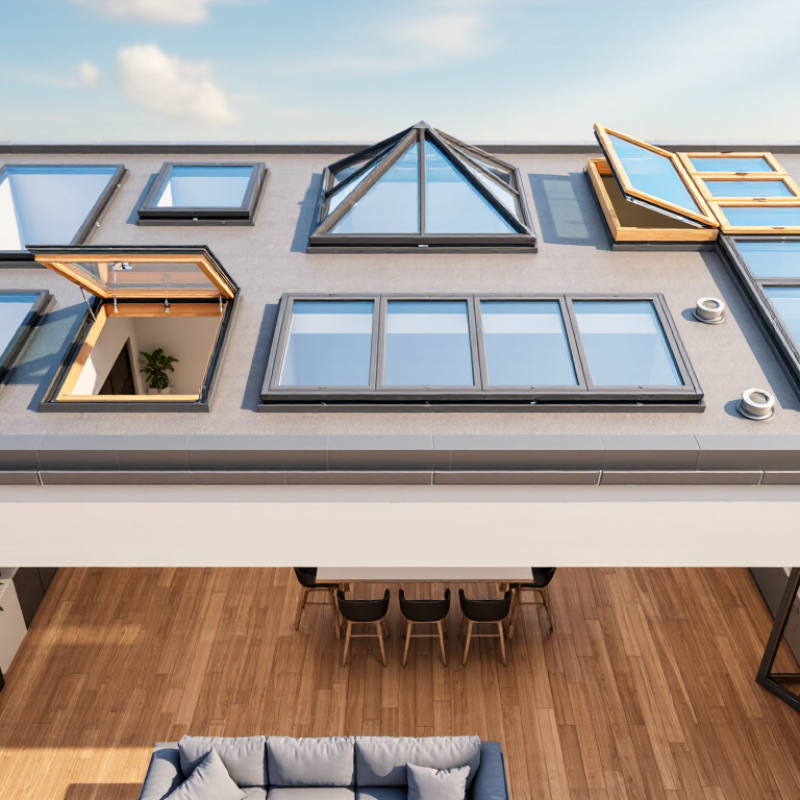
Flat roof lanterns commonly appear as pyramid, hip, ridge, circular, octagonal, box, frameless, vented, modular, and bespoke designs. Their shapes affect daylight spread, drainage, ventilation, and structural detailing. A pyramid lantern can cast light deep into a room, while a low-profile box lantern suits restricted roof heights. Vented models may reduce summer overheating, but only when occupants use them correctly. Often, they do not.
EN 673 measures the centre-pane thermal transmittance, or U-value, in W/m²K. A double-glazed unit may achieve approximately 1.1 W/m²K under declared conditions. Triple glazing can approach 0.6 W/m²K. These figures describe the glass assembly, not the complete lantern. Frames, spacers, junctions, and installation can increase real heat loss. CIBSE Guide A highlights these edge and frame effects in building heat-loss calculations.
EN 410 reports visible light transmittance and solar factor. A glass unit with 70% visible transmittance can produce a bright room, while a g-value near 0.55 admits substantial solar heat. The 2024 International Energy Agency Buildings report notes that buildings remain responsible for around 30% of global energy demand, making these choices relevant beyond appearance. Clear glass may maximise winter daylight, but summer glare can become uncomfortable near desks or sofas. Lower g-values help, yet they may reduce useful daylight. The best specification balances both results. On-site performance is less perfect than laboratory data.
| Rank | Flat Roof Lantern Type | Typical Form | Common Glazing or Cover Material | Typical Glazing Build-Up | EN 673 Centre-Panel Ug Range (W/m²·K) |
EN 410 Visible Light Transmittance (τv) |
EN 410 Solar Factor (g-Value) |
Thermal Performance Characteristics | Typical Daylight and Design Application |
|---|---|---|---|---|---|---|---|---|---|
| 1 | Double-Glazed Low-E Glass Lantern | Rectangular, pyramid or elongated ridge lantern | Low-emissivity coated insulating glass with argon cavity | 4 mm low-E glass / 16 mm argon / 4 mm clear glass | 1.0–1.2 | 0.65–0.76 | 0.45–0.58 | Provides a strong balance between heat retention and daylight. The low-E coating reduces long-wave radiant heat loss, while the argon-filled cavity lowers conduction and convection. | Suitable for most residential extensions, kitchens, dining areas and low-energy refurbishments where clear daylight is required without the weight of triple glazing. |
| 2 | Triple-Glazed Low-E Glass Lantern | Pyramid, ridge or multi-sided lantern | Triple insulating glass with two low-E coatings | 4 mm low-E glass / 12 mm argon / 4 mm clear glass / 12 mm argon / 4 mm low-E glass | 0.6–0.8 | 0.50–0.68 | 0.38–0.52 | Usually offers the lowest glazing Ug value in this table. It improves internal surface temperature and reduces downdraught risk, although the extra pane can reduce light transmission and increase weight. | Best for highly insulated buildings, colder climates and spaces where winter comfort is more important than maximum solar gain. |
| 3 | Clear Double-Glazed Glass Lantern | Traditional pyramid or rectangular lantern | Clear insulating glass with an air or argon cavity | 4 mm clear glass / 16 mm air or argon / 4 mm clear glass | 1.9–2.8 | 0.72–0.82 | 0.63–0.76 | Delivers good daylight and relatively high solar gain, but has more heat loss than a low-E specification. Performance depends strongly on cavity gas, spacer design and edge effects. | A cost-conscious choice for moderately heated rooms where high natural light levels and passive solar contribution are desirable. |
| 4 | Laminated Safety-Glass Lantern | Low-pitch rectangular or pyramid lantern | Laminated safety glass, often combined with a low-E insulating unit | 4 mm glass / 0.76 mm safety interlayer / 4 mm glass, typically used within an insulating unit | 1.1–2.0 | 0.65–0.78 | 0.45–0.65 | The interlayer holds fragments together if the glass breaks and can improve acoustic performance. Thermal results depend mainly on the complete insulating-glass construction rather than the laminate alone. | Appropriate where overhead safety, security, acoustic control or reduced fall-through risk is important. |
| 5 | Solar-Control Glass Lantern | Low-pitch ridge, pyramid or asymmetric lantern | Solar-control coated insulating glass | 4 mm solar-control glass / 16 mm argon / 4 mm clear or low-E glass | 1.0–1.4 | 0.35–0.65 | 0.25–0.45 | Reduces solar heat gains and glare by reflecting or absorbing part of the incident solar radiation. Lower g-values can improve summer comfort but may reduce useful winter gains and visible light. | Useful for south-facing or highly exposed roofs, offices, living rooms and spaces with overheating or glare concerns. |
| 6 | Multiwall Polycarbonate Lantern | Pyramidal, ridge or modular rectangular lantern | Multiwall cellular polycarbonate sheets | 16–32 mm twin-wall, triple-wall or multiwall sheet | 1.1–2.5 | 0.45–0.75 | 0.35–0.65 | Cellular air spaces provide useful insulation at relatively low weight. The material is impact-resistant, but optical clarity, long-term surface condition and sheet direction can affect performance. | A practical lightweight option for conservatories, utility areas, schools and projects where impact resistance and ease of handling are priorities. |
| 7 | Solid Polycarbonate Lantern | Flat, shallow-pitched or curved lantern | Solid clear, opal or tinted polycarbonate sheet | 6–10 mm solid polycarbonate | 2.5–3.5 | 0.55–0.88 | 0.45–0.78 | Offers high impact resistance and high light transmission in clear grades, but its thermal insulation is generally weaker than that of multiwall polycarbonate or insulated glass. | Suitable where robustness, low weight and high transparency are more important than achieving the lowest thermal transmittance. |
| 8 | Acrylic Sheet Lantern | Pyramid, domed or shallow rectangular lantern | Clear, opal or tinted polymethyl methacrylate sheet | Double-skin acrylic sheet with an enclosed air space | 1.8–3.0 | 0.55–0.92 | 0.45–0.80 | Acrylic can provide excellent clarity and weather resistance. Insulation improves when double-skin or cellular construction is used, but thermal performance varies considerably with sheet spacing and framing. | Suitable for lightweight daylighting where a glass-like appearance and high visible transmittance are required. |
| 9 | Opal or Diffusing Lantern | Low-profile pyramid, ridge or rectangular lantern | Opal glass, diffusing polycarbonate or diffusing acrylic | Double-skin or insulating diffusing panel system | 1.2–2.8 | 0.35–0.70 | 0.30–0.60 | Diffusing surfaces scatter sunlight, reducing harsh contrast and direct glare. The lower visible transmittance is often offset by more uniform light distribution across the room. | Well suited to classrooms, studios, offices, kitchens and living spaces where visual comfort is more important than a clear view of the sky. |
| 10 | Opening or Ventilated Roof Lantern | Ridge lantern with manual or electric opening sections | Usually low-E double glazing, polycarbonate or acrylic panels | Performance depends on the selected glazing; commonly 4 mm / 16 mm argon / 4 mm low-E glass | 1.0–2.5 | 0.45–0.78 | 0.35–0.65 | Allows purge ventilation and can reduce overheating when open. When closed, the frame, seals and opening mechanism can create additional thermal bridges compared with a fixed lantern. | Recommended for occupied rooms needing daylight together with controllable natural ventilation, especially where mechanical cooling is limited. |
Technical note: The Ug values are representative centre-of-glazing ranges calculated or assessed using the principles of EN 673. Visible light transmittance (τv) and solar factor (g) are representative EN 410 optical values for common glazing and sheet constructions. Actual whole-lantern performance will also depend on frame U-value, spacer, roof geometry, edge losses, vents, seals, shading and installation quality.
Flat roof lanterns are best classified by frame, roof pitch, drainage, and opening system. The ten practical types are fixed, manual-vented, electric-vented, pyramidal, barrel-vaulted, segmented, glass, polycarbonate, insulated, and smoke-vent lanterns. EN 1873:2014+A1:2016 supports performance checks for factory-made rooflights with upstands. It does not replace structural design or site inspection.
Frame choice affects deflection, thermal bridging, and durability. Thermally broken frames usually perform better than basic metal sections. Roof pitch must move rainwater quickly toward gutters, not onto the roof membrane. Drainage channels need visible outlets and clean access. Small blockages can create surprising ponding. Opening systems should include restrictors, weather seals, and safe control logic. Manual vents suit simple rooms. Electric vents offer timed purge ventilation. Smoke-vent systems require separate evidence under EN 12101-2, where applicable.
The 2023 Global Status Report for Buildings and Construction states that buildings used 34% of global energy and produced 37% of energy- and process-related emissions in 2022. Daylight and controlled ventilation can reduce artificial lighting and cooling demand, but the result depends on orientation, glazing, and airtightness. A large lantern is not automatically efficient. I would verify U-values, solar-factor data, wind resistance, impact resistance, and drainage details before approval. Some specifications still describe “maintenance-free” products too casually. That wording deserves challenge. Performance data should match the installed size, curb, and opening configuration, not only the laboratory sample.
What Are the Top 10 Types of Flat Roof Lanterns?
Selecting Lantern Types by Climate, Ventilation, Safety, and Maintenance Needs
A roof lantern is not just a glass ornament. Its performance changes with weather, room use, and cleaning access. The ten common choices include fixed glass, opening glass, manual-vented, electric-vented, double-glazed, triple-glazed, solar-control, self-cleaning, polycarbonate, and walk-on systems. “Top” is conditional. In hot climates, solar-control glazing usually matters more than maximum transparency. In colder regions, low-emissivity double or triple glazing can reduce heat loss. Frame quality still decides comfort. The IEA Buildings 2023 report states that buildings consume about 30% of global final energy. Daylight alone is not an efficiency strategy.
Ventilation needs equal attention. Electric opening lanterns suit high ceilings and inaccessible rooms. Manual operators cost less, but become inconvenient above kitchens or stairwells. CIBSE guidance identifies solar gains and ventilation as key comfort factors. For safety, specify laminated inner glass, restricted opening limits, and structural design for local wind, snow, and impact loads. Polycarbonate is lighter, yet it can scratch and age visibly. Self-cleaning coatings reduce grime, not maintenance. NRCA maintenance guidance supports roof inspections at least twice yearly. That sounds simple. It is often ignored.
Tips: Ask for U-value, g-value, acoustic rating, and tested airtightness. Check the curb, flashings, drainage, and access first. In my experience, the cheapest lantern becomes costly when condensation appears. I would question “maintenance-free” claims. Seals, gutters, and controls still need inspection. A small opening sensor can prevent overheating, but only if someone tests it.
Selecting lantern types by climate, ventilation, safety, and maintenance needs.
The chart uses a comparative 1–5 scale based on typical design characteristics. Higher scores indicate better performance for cold-climate thermal control, ventilation flexibility, safety, or ease of maintenance. Actual results vary with glazing specification, frame material, installation quality, exposure, and local building regulations.
Leave your projects details, and one of our team will reach out to answer any questions you may have