
Choosing reliable Double Doors manufacturers in China requires more than comparing catalog prices. Global buyers must examine engineering quality, production consistency, documentation, and communication. A polished showroom image means little if the frame twists during installation. Check material grades, door-core construction, hinge capacity, weather seals, surface treatment, and hardware compatibility. Ask for factory videos, inspection records, project references, and clearly labeled samples. Small details matter.
Gary Katz, a respected door-installation educator, has repeatedly emphasized a practical truth: “A door is only as good as its installation.” That warning applies strongly to international sourcing. Even well-made Double Doors can perform poorly when measurements, wall conditions, shipping protection, or adjustment instructions are overlooked. Experienced manufacturers usually provide shop drawings, packing photographs, installation guidance, and responsive after-sales support. Those services reduce uncertainty before the container leaves the port.
China offers broad manufacturing capacity, including solid timber, engineered wood, aluminum, steel, and glass-panel designs. The best suppliers do not simply promise customization. They explain limitations honestly. That is important. A supplier refusing to discuss tolerances may create trouble later. Buyers should also compare lead times, replacement-part policies, finish durability, and quality-control procedures. Independent inspections remain sensible, even when a factory appears professional. No shortlist is perfect. Specifications can change, samples can differ from mass production, and communication can fail. This guide examines leading Chinese Double Doors manufacturers through practical criteria, helping architects, distributors, contractors, and developers make decisions based on evidence rather than attractive promises.
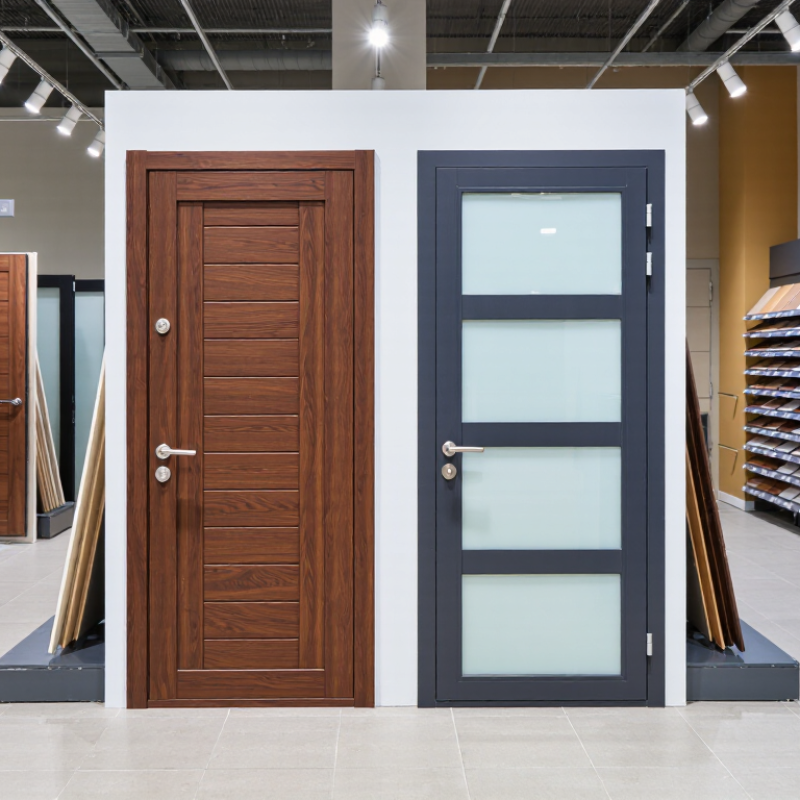
A top China double doors manufacturer is defined by more than attractive catalog photos. Experienced buyers examine frame strength, hinge performance, seal quality, and surface durability. A well-built door should open smoothly, close evenly, and remain stable after repeated operation. Ask for material specifications, tolerance data, and test reports that match the target market’s requirements.
Factory experience matters when projects involve unusual sizes, fire ratings, thermal insulation, or coastal environments. Reliable manufacturers explain these limits clearly. They provide accurate drawings, production samples, and inspection records before shipment. On-site quality checks should cover welding points, glass protection, hardware alignment, packaging, and moisture resistance. Small details matter here. A damaged corner can become an expensive installation problem.
Communication is another practical measure of professionalism. The supplier should answer technical questions directly and confirm changes in writing. Export experience helps with documentation, labeling, and delivery planning, but it does not replace independent verification. A sample may look excellent while mass production varies. That risk deserves attention. Buyers should compare samples with final inspection results and request corrective action procedures. No manufacturer is perfect, and honest discussion of defects often reveals more reliability than polished promises.
| No. | Evaluation Dimension | What a Top Manufacturer Should Demonstrate | Objective Evidence Buyers Can Request | Why It Matters for Global Buyers | Suggested Weight |
|---|---|---|---|---|---|
| 1 | Product Scope | A clearly defined range of exterior, interior, commercial, residential, hinged, glazed, fire-rated, or thermally broken double-door systems. | Technical catalogues, section drawings, product specifications, applicable test reports, and installation manuals. | Helps buyers confirm that the supplier can manufacture the required door type rather than simply trade standard products. | 8% |
| 2 | Compliance with Applicable Standards | Products are designed and tested against the standards required in the destination market, such as EN 14351-1 for windows and external pedestrian doorsets where applicable. | Valid test reports, declarations of performance where required, conformity documents, and traceable product-model references. | Reduces customs, approval, liability, and project-inspection risks. | 15% |
| 3 | Quality Management System | Documented controls for incoming materials, production inspection, final inspection, nonconformity handling, and corrective actions. | Current ISO 9001 certificate, process-control records, inspection checklists, and recent internal or third-party audit records. | A quality system provides repeatable processes for production batches and export orders. | 12% |
| 4 | Material Traceability | Consistent control of aluminium, steel, stainless steel, glass, seals, hardware, coatings, and core materials. | Material certificates, coating specifications, batch or lot records, hardware schedules, and approved-substitution procedures. | Improves durability, replacement compatibility, and accountability when defects occur. | 10% |
| 5 | Thermal Performance | Door configurations are evaluated for thermal transmittance, with results based on the complete doorset rather than the frame alone. | Declared U-value or Ud test/calculation, frame and glass specifications, spacer details, and climate-zone recommendations. | Supports energy-code compliance and helps prevent condensation or excessive heat loss. | 10% |
| 6 | Air, Water, and Wind Performance | The complete double-door assembly is tested for air permeability, watertightness, and resistance to wind load when these properties are required. | Laboratory reports identifying the exact profile, glass, hardware, size, configuration, and performance classifications. | Shows whether the doors are suitable for the intended building exposure and weather conditions. | 12% |
| 7 | Hardware and Security | Compatible hinges, locks, multipoint systems, panic hardware, cylinders, handles, restrictors, and optional access-control interfaces. | Hardware schedule, cycle-test information, corrosion-resistance details, security classification where applicable, and spare-parts list. | Reliable hardware directly affects security, service life, user safety, and maintenance cost. | 10% |
| 8 | Safety and Fire Options | Fire-rated, smoke-control, safety-glazing, emergency-exit, and accessibility options are offered only with the required tested configuration. | Fire-test reports, glazing certificates, hardware approvals, maximum tested dimensions, and installation limitations. | Prevents unsafe substitutions and invalid claims on regulated or high-occupancy projects. | 10% |
| 9 | Dimensional and Customization Capability | Controlled customization of opening dimensions, handing, glazing, thresholds, colours, panel designs, screens, and accessories. | Approved shop drawings, tolerance tables, colour samples, sample-unit records, and engineering-change procedures. | Accurate customization reduces site rework, installation delays, and fitting problems. | 8% |
| 10 | Factory and Production Controls | Dedicated equipment and controlled processes for cutting, machining, welding, assembly, glazing, sealing, coating, and final adjustment. | Factory audit, production-flow photographs or video, equipment list, calibration records, and in-process inspection data. | Provides confidence in repeatability, capacity, and production consistency. | 8% |
| 11 | Export Packaging and Logistics | Packaging is adapted to door weight, glass content, moisture exposure, container handling, and unloading conditions. | Packaging drawings, loading plans, moisture-protection method, shipping marks, inspection photos, and Incoterms quotation. | Reduces breakage, surface damage, missing components, and delivery disputes. | 7% |
| 12 | Installation and After-Sales Support | Clear installation instructions, troubleshooting guidance, warranty terms, spare-parts availability, and responsive technical communication. | Warranty document, installation drawings, maintenance schedule, response-time commitment, and replacement-parts policy. | Good support lowers total ownership cost and protects project schedules after delivery. | 8% |
| Total Evaluation Weight | 100% | ||||
Note: Required performance levels, certificates, and testing methods should always be matched to the destination country, building code, project specification, door size, glazing configuration, and intended use.