China Top 10 CDX Plywood Manufacturers for Global Buyers

Choosing a reliable plywood manufacturer requires more than comparing prices or browsing attractive product photos. For global buyers, the real questions concern veneer quality, core construction, bonding strength, emissions, moisture resistance, and export consistency. This guide examines China’s top 10 CDX plywood manufacturers through those practical criteria, with attention to factory experience, production capacity, quality control, and international documentation.

Cdx Pine Plyood is often selected for roofing, wall sheathing, packaging, and general construction. Its performance depends on more than the word “pine.” Veneer grading, panel thickness, adhesive coverage, hot-press pressure, and edge finishing can change the final result. Small gaps may appear after cutting. That matters.

As forest-products specialist Dr. Robert H. Falk has stated, “Plywood quality begins with sound veneers and reliable bonding.” This principle remains useful when reviewing Chinese suppliers. A professional buyer should request recent test reports, product samples, mill photographs, and clear information about face and core grades. Factory audits can reveal details that catalogs hide, such as uneven stacking, weak repairs, or inconsistent panel dimensions.

The manufacturers discussed in this article are not ranked only by scale. Their value is considered through manufacturing experience, technical control, communication, customization, and evidence of dependable shipments. Some suppliers may offer excellent pricing but limited documentation. Others may provide stronger certification support at a higher cost. Neither option is automatically best.

No list is perfect. Buyer requirements differ by climate, building practice, project budget, and destination standards. Careful verification is still necessary before placing a commercial order.
China Top 10 CDX Plywood Manufacturers for Global Buyers

CDX Plywood: Definition, Grades, and Global Applications

CDX plywood is a structural panel made from rotary-cut wood veneers. “C” identifies the better face veneer, while “D” indicates a rougher reverse face. “X” refers to exterior-type adhesive, not unlimited outdoor durability. The grade describes appearance and bonding, not complete product performance. This distinction matters when comparing China-made panels with overseas specifications.

In North American practice, CDX commonly supports roof sheathing, wall sheathing, subfloors, temporary formwork, and transport packaging. Its exposed face may contain knots, splits, and repaired defects. Buyers should verify thickness, core gaps, bending strength, moisture resistance, and formaldehyde emissions before ordering. The APA Engineered Wood Association identifies Exposure 1 panels as suitable for temporary moisture exposure, not permanent weathering. That detail is often overlooked.

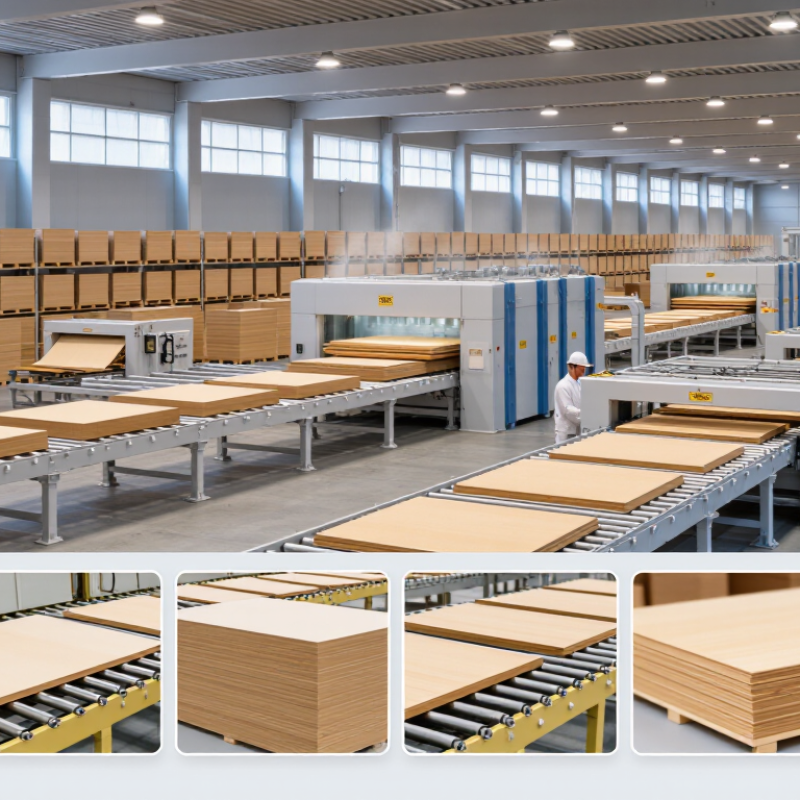
Market demand remains substantial. Grand View Research valued the global plywood market at approximately USD 52.9 billion in 2023 and projected growth through 2030. FAO’s Forestry Production and Trade database also records China as a major plywood-producing and exporting country. However, shipment volume does not prove consistent quality. A factory’s real capability appears in calibrated thickness, stable veneer moisture, documented testing, and careful edge sealing. Small differences matter. A 12 mm panel that measures below tolerance can create weak joints during installation. Buyers should request current test reports, production samples, and packing photographs. Standards also vary by destination, so one certificate may not satisfy every building code. The label is useful, but never sufficient alone.

How China’s Top CDX Plywood Manufacturers Are Selected

Selecting China’s leading CDX plywood manufacturers requires more than comparing quoted prices. Buyers should examine how each factory controls veneer selection, adhesive application, panel pressing, and sanding. Ask for recent production records and independent test reports that match the intended panel thickness and grade. A certificate alone is not enough. Check its scope, issuing body, and validity.

Samples can reveal practical differences. Inspect the face and back veneers for open knots, patches, and uneven repairs. Measure thickness at several points, then check whether panel edges remain square after handling. For outdoor or structural applications, confirm that the product’s stated performance suits the project; CDX is not automatically waterproof or suitable for every exposure. Request clear details on core construction, formaldehyde testing, packaging, and moisture protection during shipping. Small details matter.

A reliable supplier should explain its inspection process and respond consistently when specifications change. Compare lead times against demonstrated production capacity, not optimistic promises. Where possible, review an order’s inspection photos and loading records, and arrange third-party checks for larger shipments. Communication is evidence, too. Still, no checklist removes every risk: a strong sample may not represent every panel in a full container. Buyers should define acceptance criteria before production and keep records of approved samples, tolerances, and corrective actions.

Profiles of China’s Leading CDX Plywood Manufacturers

China Top 10 CDX Plywood Manufacturers for Global Buyers

China’s leading CDX plywood manufacturers serve construction, packaging, and concrete-forming markets worldwide. Their profiles differ in veneer quality, core design, pressing control, and export experience. FAO’s Global Forest Products Facts and Figures 2022 places China at roughly three-quarters of global plywood production. That scale creates strong capacity, but capacity alone does not prove consistent quality.

Reliable manufacturers usually provide traceable log sourcing, calibrated thickness records, and batch-level inspection reports. Experienced factories control veneer moisture before hot pressing. They also monitor glue spread, panel density, edge sealing, and surface defects. Buyers should request test evidence for bonding strength, formaldehyde emissions, and thickness tolerance. Reports aligned with EN 314-2, ASTM D1037, or TSCA Title VI can improve purchasing confidence. However, certificates may cover only selected batches. This is where many evaluations become too optimistic.

The strongest profiles also show practical export discipline. Look for moisture-resistant packaging, corner protection, clear pallet markings, and photographic loading records. CDX panels are generally Exposure 1 products, not permanent outdoor siding. That distinction matters on wet job sites. Some suppliers publish impressive capacity figures, yet provide limited evidence on rejects or corrective actions. That deserves a closer question.

Tips: Request three recent production samples. Compare face veneer, core gaps, thickness, and screw holding. Ask for an independent laboratory report, not only a factory statement. Confirm whether the quoted price includes fumigation, packing, and port delivery.

China Top 10 CDX Plywood Manufacturers for Global Buyers - Profiles of China’s Leading CDX Plywood Manufacturers
Profile Typical sourcing focus CDX face and bond description Common format to request Thicknesses to check Buyer checks
01 · Construction sheathing General structural sheathing orders CDX generally denotes C- and D-grade face veneers with an Exposure 1 bond classification; verify the product standard and grade marking. 4 × 8 ft (about 1,220 × 2,440 mm), if available Common requests include 12, 15, and 18 mm; confirm actual and nominal thickness. Request panel grade, applicable standard, thickness tolerance, and installation-use guidance.
02 · Roof sheathing Panels specified for roof-deck applications Ask for the declared panel grade and bond classification; Exposure 1 is not a claim of permanent exterior exposure. 4 × 8 ft (about 1,220 × 2,440 mm), subject to order specification Often quoted by project specification; check 12–18 mm options. Confirm span/use requirements with the project designer and request test or compliance documents.
03 · Wall sheathing Panels for wall assembly specifications C/D face grades are associated with CDX; confirm face-grade definitions under the stated grading standard. 4 × 8 ft is a common North American panel size; confirm manufacturing availability. Specify required thickness rather than relying on a general product description. Check panel dimensions, squareness, edge condition, and packaging for transit.
04 · Subfloor panels Flooring projects requiring a specified plywood panel CDX alone does not establish suitability for every subfloor assembly; obtain the project-required grade and performance data. Request project dimensions; 1,220 × 2,440 mm is a common nominal format. Commonly specified options include 15, 18, and 21 mm; verify availability and tolerance. Confirm load/span suitability, panel construction, and applicable building-code documentation.
05 · Cut-to-size supply Orders requiring non-standard sheet dimensions Grade and bond classification should remain stated on the order documents for cut panels. Specify finished length, width, squareness, and cutting tolerance. Specify thickness and tolerance in millimetres or inches. Request a cutting plan, edge-quality criteria, and confirmation of usable yield.
06 · Mixed-thickness orders Buyers combining several thickness specifications Request grade and bond details for each thickness; do not assume one specification covers the whole shipment. Confirm sheet size separately for each line item. Possible inquiry points include 9, 12, 15, 18, and 21 mm; actual range varies by supplier. Check minimum order quantities, packing separation, and thickness-specific inspection records.
07 · Container-load export orders Bulk shipments planned around a destination market Require consistent product descriptions and grade documentation on quotation, packing list, and shipping documents. Agree sheet dimensions and pallet configuration before production. Set the thickness mix in the purchase specification. Verify packing method, moisture protection, gross weight, and destination-market import requirements.
08 · Documentation-focused supply Projects needing traceable product and quality records Ask for the precise standard, product grade, adhesive/bond classification, and supporting test documents applicable to the offered panel. State the required dimensions in the purchase order and certificate request. List each required thickness and tolerance. Check document validity, issuing body, product scope, and consistency with the shipment.
09 · Repeat-order supply Buyers seeking consistent specifications across shipments Record the agreed grade and bond description as controlled purchase-order requirements. Keep size, tolerances, and edge details consistent in repeat orders. Use a fixed thickness specification with stated tolerance. Agree inspection sampling, reference samples, change notification, and batch traceability.
10 · Trial-order supply Initial evaluation before larger-volume purchasing Evaluate the delivered panel against the written CDX grade, bond, and performance requirements—not the label alone. Order a clearly specified sample or trial lot before scaling up. Trial the thicknesses intended for the final application. Inspect veneer repairs, delamination, dimensions, moisture condition, and packaging on receipt.

Note: The numbered entries are anonymized sourcing profiles, not named companies or a verified ranking of manufacturers. Product sizes, thicknesses, standards, and availability vary by supplier and order; confirm all specifications in writing before purchase.

Quality Standards, Certifications, and Production Capabilities

China Top 10 CDX Plywood Manufacturers for Global Buyers

Quality Standards, Certifications, and Production Capabilities

Reliable CDX plywood starts with controlled veneer selection and stable core construction. Buyers should check face grade, thickness tolerance, moisture content, and panel squareness. CDX usually means a C-grade face, D-grade back, and exposure-rated adhesive. It is not a permanent exterior product. That distinction matters on construction sites.

Serious manufacturers test bonding strength, formaldehyde emissions, and dimensional stability. Useful documentation may include FSC or PEFC sourcing records, CARB or TSCA compliance, and quality reports from independent laboratories. Certification scope must match the actual factory and product line. A certificate alone proves little. I have seen attractive samples hide uneven sanding and weak edges. Production capacity also needs evidence, such as press size, daily output, veneer drying systems, and container-loading records. Factory audits and batch traceability reduce unpleasant surprises.

Tips: Request recent test reports, not only scanned certificates. Compare three samples from different production dates. Check panel thickness with a calibrated gauge. Ask how rejected panels are recorded. Confirm packaging for humid routes, because wrapped plywood can still absorb moisture. Leave room for inspection errors; even disciplined factories can produce inconsistent batches. A clear purchase specification should define grade, thickness, glue class, tolerances, packaging, and inspection rules.

How Global Buyers Can Compare Suppliers and Place Orders

China Top 10 CDX Plywood Manufacturers for Global Buyers

Comparing China’s top CDX plywood manufacturers requires more than checking prices. Request face and core veneer specifications, glue type, thickness tolerance, and formaldehyde test results. Ask for recent production photos, not only polished catalog images. A reliable supplier should explain how panels are graded, pressed, packed, and inspected. Request a sample before discussing a large order. Hold it, measure it, and inspect the edges.

Tips: Build a simple comparison sheet. Record factory location, monthly capacity, minimum order, lead time, export experience, and response speed. Check whether certificates match the exact product. A certificate for another thickness proves little. Third-party inspection can confirm moisture, bonding, dimensions, and packaging. It adds cost, but damaged panels cost more.

When placing an order, write every detail into the purchase contract. Include thickness, dimensions, quantity tolerance, surface grade, packing method, inspection rules, payment stages, and shipping terms. Confirm whether the quoted price includes inland transport and export documentation. Ask for a production schedule with milestone photos. Leave time for port delays and seasonal congestion. My own comparison sheets have missed small details before, especially pallet height and moisture protection. That mistake is easy to repeat. Clear questions, written evidence, and a controlled sample order provide stronger protection than a low initial quotation.

Before you go

Leave your projects details, and one of our team will reach out to answer any questions you may have