Choosing among China’s top aluminium windows suppliers requires more than comparing online prices. A reliable supplier must combine tested profiles, accurate fabrication, dependable hardware, and clear after-sales support. Factory experience matters too. A polished showroom cannot replace a controlled production line.
Dr. Joseph Lstiburek, a respected building-science expert, offers a useful warning: “A window is a hole in a wall.” That simple sentence explains why aluminium windows deserve careful evaluation. Their performance depends on thermal breaks, drainage paths, glass specification, gaskets, and installation details. A strong supplier should provide test data, project references, and technical drawings before accepting an order. Look closely. Small details often decide long-term performance.
This guide examines leading Chinese suppliers through practical criteria, including manufacturing capacity, customization, energy efficiency, certification, export experience, and communication quality. It also considers whether a supplier can reproduce consistent dimensions across large projects. That point is easy to overlook. One poorly fitted sash can create water leakage, air infiltration, or repeated maintenance costs.
The ranking is not absolute. Regional climate, building codes, budget, and project design can change the best choice. Some suppliers may offer excellent profiles but weaker installation guidance. Others may communicate well yet lack advanced testing facilities. Buyers should verify every important claim independently, request samples, and inspect finished projects where possible. That extra effort may feel slow, but it reduces expensive surprises later.
A leading aluminium windows supplier in China is defined by more than factory size or attractive prices. Reliable suppliers explain alloy grades, profile thickness, coating options, and glass performance clearly. They should provide documented test results, production samples, and traceable quality records. Experienced teams also understand regional weather, building codes, and installation conditions. A window designed for coastal humidity may need different protection from one used in a dry inland city.
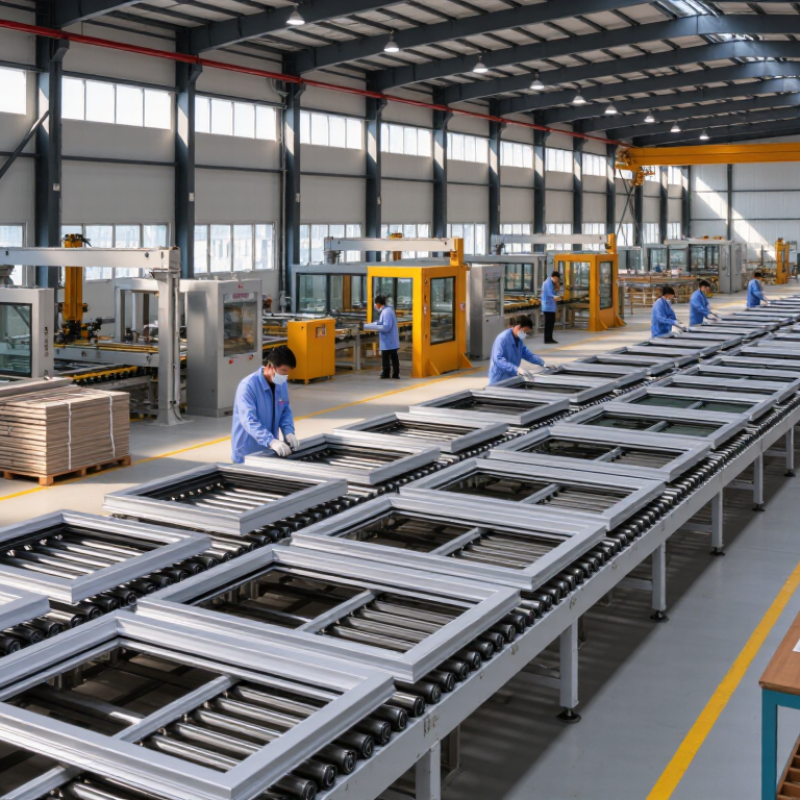
Production control reveals practical expertise. Inspectors should check profile dimensions, corner joints, hardware movement, drainage holes, and surface consistency. Strong suppliers use repeatable processes, not only final inspections. During project discussions, they ask about opening sizes, wind exposure, thermal targets, and delivery schedules. That behavior suggests engineering responsibility. Still, no supplier is perfect. Even a capable factory may misjudge a custom detail or delay a replacement part. Honest communication matters when problems appear.
Tips: Request a full-size sample. Test locks, seals, and drainage paths by hand. Ask for recent project references and independent performance reports. Confirm packaging details, spare hardware, inspection stages, and after-sales response times in writing. A reliable supplier should explain limitations instead of promising everything. Look closely at small details. A clean joint, even gasket, and smooth handle often reveal more than polished sales material. The best choice is usually the supplier that combines technical evidence, steady communication, and realistic commitments.
What Are the Top Aluminium Windows Suppliers in China?
Chinese aluminium window manufacturers commonly offer casement, sliding, tilt-and-turn, folding, and fixed windows. Casement windows open outward with strong ventilation and reliable sealing. Sliding windows save space, but their track systems need regular cleaning. Tilt-and-turn designs support both ventilation and emergency access. Folding windows suit balconies and wide openings, although their hardware can require closer maintenance.
Thermal-break aluminium windows use polyamide barriers between interior and exterior profiles. This design reduces heat transfer and improves indoor comfort. The International Energy Agency reports that buildings consume about 30% of global final energy. Therefore, frame insulation deserves attention, not just glass thickness. Grand View Research’s 2024 aluminium windows analysis also identifies energy efficiency and renovation demand as important market drivers. However, performance depends heavily on installation quality. A strong product can still fail.
Tips: Ask suppliers for U-value, air-tightness, water-tightness, and wind-load test results. Check whether tests match your project’s climate and building height. For coastal areas, confirm the surface treatment and corrosion resistance. I would not choose by price alone. A cheaper sliding window may create higher maintenance costs later. Also inspect corner joints, drainage holes, rollers, and gasket compression before ordering. Small details matter.
| Key Type of Aluminium Window | Opening Configuration | Common Aluminium Profile | Typical Glazing Options | Typical Thermal Performance | Weather and Air-Tightness Features | Recommended Applications | Main Advantages |
|---|---|---|---|---|---|---|---|
| Casement Window | Side-hinged sash opening inward or outward; single-, double- or multi-sash designs | Thermally broken aluminium; typical frame depth of approximately 45–75 mm | 5–6 mm single glass; 5+12A+5 mm or 6+12A+6 mm double insulating glass; laminated or low-E glass available | Typical whole-window U-value: approximately 1.4–3.0 W/m²·K, depending on frame, glass and size | Compression seals, multi-point locking, drainage channels and optional insect screens | Residential buildings, offices, hotels, schools and high-rise apartments | Strong ventilation, effective sealing, easy cleaning and good design flexibility |
| Sliding Window | One or more panels slide horizontally along rollers; two-track or three-track systems are common | Standard or thermally broken aluminium; typical frame depth of approximately 60–100 mm | Single glass, double insulating glass and laminated safety glass; common double-glazing cavities range from 6–20 mm | Typical whole-window U-value: approximately 1.8–3.5 W/m²·K, depending on the sliding system | Interlocking meeting stiles, brush seals, rollers, weep holes and optional drainage improvements | Balconies, apartments, kitchens, corridors and areas with limited interior clearance | Space-saving operation, wide horizontal openings and comparatively simple maintenance |
| Tilt-and-Turn Window | Tilts inward from the top for ventilation or turns inward from the side for full opening | Thermally broken aluminium; typical frame depth of approximately 65–85 mm | Double or triple insulating glass; low-E, argon-filled and laminated configurations are commonly available | Typical whole-window U-value: approximately 0.9–2.0 W/m²·K with high-performance glazing | Continuous compression gaskets, multi-point locking, concealed or surface-mounted hardware and controlled drainage | Energy-efficient homes, offices, hospitals and buildings requiring secure ventilation | High air tightness, flexible ventilation, improved security and convenient interior cleaning |
| Awning Window | Top-hinged sash projects outward from the bottom; usually operated with friction stays or handles | Thermally broken or standard aluminium; typical frame depth of approximately 45–75 mm | Single glass, insulating glass, laminated glass and low-E glass | Typical whole-window U-value: approximately 1.4–3.0 W/m²·K, depending on glazing and frame design | Top-hinged weather-shedding design, perimeter seals, locking handles and sill drainage | Bathrooms, basements, kitchens, clerestory openings and rainy or humid climates | Allows ventilation during light rain, offers privacy and provides controlled airflow |
| Lift-and-Slide Door Window System | Large panels lift slightly from the running track and slide horizontally; usually two- or four-panel layouts | Heavy-duty thermally broken aluminium; typical frame depth of approximately 100–250 mm | Large double or triple insulating glass units; laminated, low-E, solar-control and argon-filled glass options | Typical whole-window U-value: approximately 1.0–2.5 W/m²·K, subject to panel size and glazing | Multi-point locking, compression seals, stainless-steel or reinforced rollers, recessed tracks and engineered drainage | Terraces, villas, hotels, commercial entrances and large openings facing gardens or balconies | Supports large glass areas, smooth operation, broad views and strong indoor-outdoor connectivity |
| Bi-Folding Aluminium Window or Door | Multiple hinged panels fold and stack to one or both sides of the opening | Thermally broken aluminium; typical sash depth of approximately 50–80 mm | Double or triple insulating glass, laminated safety glass, low-E glass and solar-control glass | Typical whole-window U-value: approximately 1.3–2.8 W/m²·K, depending on panel count and glazing | Top-hung or bottom-rolling hardware, multi-point locks, compression seals and threshold drainage options | Restaurants, patios, balconies, cafés, villas and entertainment areas | Creates a very wide clear opening and allows panels to be parked compactly at the side |
| Fixed Aluminium Window | Non-opening glazed panel; can be combined with operable casement, sliding or awning units | Standard or thermally broken aluminium; typical frame depth of approximately 35–75 mm | Single glass, double or triple insulating glass, laminated glass, low-E glass and solar-control glass | Typical whole-window U-value: approximately 0.8–2.8 W/m²·K, depending primarily on glazing and frame | Perimeter glazing seals, pressure plates or structural glazing details, sill drainage and sealed joints | Curtain-wall infill, stairwells, atriums, feature façades and areas requiring daylight without ventilation | High daylight transmission, excellent airtightness, clean sightlines and low hardware maintenance |
| Thermal-Break Aluminium Window | Available in casement, sliding, awning, tilt-and-turn and fixed configurations | Aluminium profiles separated by polyamide thermal barriers, commonly around 14.8–34 mm depending on the system | Double or triple insulating glass, low-E glass, laminated glass and argon-filled units | Typical whole-window U-value: approximately 0.8–2.0 W/m²·K in well-designed systems | Enhanced frame insulation, compression gaskets, thermal isolators, multi-point locking and managed drainage | Cold climates, energy-efficient commercial buildings, premium residences and green-building projects | Reduces heat transfer and condensation risk while retaining aluminium’s strength and dimensional stability |
Note: The specifications shown are typical ranges for aluminium window systems commonly manufactured in China. Actual performance depends on profile design, thermal-break width, glazing composition, window dimensions, hardware, fabrication quality and applicable testing standards.
China’s leading aluminium window suppliers usually fall into three groups: large integrated manufacturers, export-focused fabricators, and project-based specialists. Integrated manufacturers often control extrusion, powder coating, glass processing, and assembly under one roof. This improves consistency and shortens production schedules. Their market strength is volume, making them suitable for apartment developments, hotels, and large commercial projects.
Export-focused suppliers compete through international logistics, technical documentation, and flexible communication. Many can produce thermal-break windows, sliding systems, casement windows, and curtain-wall components. Strong suppliers provide air-infiltration, water-tightness, and wind-load test reports rather than relying on attractive samples. They also explain glass thickness, hardware grades, coating systems, and installation requirements clearly. That level of detail matters.
Project-based fabricators often offer deeper customization. They can adjust frame depths, drainage paths, colors, opening styles, and unusual dimensions. This is valuable for villas, renovations, and coastal buildings. However, customization may increase tooling costs and create longer approval cycles. I have found that the cheapest quotation is rarely the easiest to manage. Small errors in dimensions can affect glass orders, packaging, and installation. A reliable supplier should confirm shop drawings before production, protect finished frames with suitable wrapping, and provide traceable quality records. Some suppliers still communicate well but lack strong after-sales systems. That weakness deserves attention. Buyers should compare production capacity, testing evidence, packaging methods, warranty terms, and response times before choosing a long-term aluminium window partner.
China’s aluminium window supplier landscape is supported by a large and expanding domestic aluminium industry. Annual primary aluminium output increased from approximately 37.1 million tonnes in 2020 to 43.4 million tonnes in 2024, indicating strong material availability for profile extrusion, fabrication, and export-oriented window production. Supplier strengths commonly include access to aluminium resources, manufacturing scale, customization capability, and export capacity.
Source: National Bureau of Statistics of China; annual primary aluminium production figures, rounded to one decimal place.
When comparing aluminium window suppliers in China, quality begins with evidence, not showroom appearance. UNEP’s 2023 Global Status Report states that buildings consume about 34% of global energy and produce 37% of energy-related emissions. Therefore, ask for tested U-values, air leakage, water tightness, and wind-load results. These figures should identify the test laboratory, sample size, and test date. A glossy certificate alone proves little.
Check whether the factory operates a documented quality system, such as ISO 9001, with batch traceability from billet to finished window. For projects serving Europe, verify applicable CE documentation and EN 14351-1 performance testing. Chinese projects may require compliance with GB/T 8478. Request coating thickness records, alloy-grade certificates, glass configuration sheets, and hardware inspection reports. I have found that small sample tests can hide inconsistent corner joints. Independent retesting is wiser.
Production capacity needs measurable proof. Compare monthly extrusion, coating, insulating-glass, and assembly capacity, not only claimed annual output. Ask for equipment lists, shift patterns, rejection rates, maintenance records, and recent delivery data. IEA’s Energy Efficiency 2023 report identifies buildings as responsible for roughly 30% of global final energy demand, making thermal performance commercially important. Yet capacity can create risk. An overloaded line may shorten inspection time and increase defects. A factory visit helps, but it is not conclusive. Review third-party audits, production photographs with dates, and a pilot order before approving large volumes.
When selecting a Chinese aluminium windows supplier, look beyond attractive catalog photos. A reliable supplier should explain alloy grades, wall thickness, thermal-break design, glass options, and hardware quality in clear technical language.
Ask for test reports covering air leakage, water tightness, wind resistance, and thermal performance. These documents should match the actual window series, not a similar product.
Factory experience matters, but production control matters more. Request photos or videos of extrusion, powder coating, assembly, and final inspection. If possible, arrange an independent factory audit or hire a local inspection company. Check whether workers measure frame dimensions, corner joints, drainage holes, and surface finish before packing. Small gaps can become expensive problems on site.
Communication also deserves careful testing. Send one detailed drawing and compare the supplier’s questions with your requirements.
A professional team should identify missing details, such as opening direction, glazing thickness, mesh type, and installation method.
Confirm packaging, replacement procedures, lead times, payment terms, and responsibility for damaged goods in writing. Do not choose only by price. The cheapest quotation may exclude reinforcement, suitable seals, or compliant glass.
That mistake is easy to make. A sample may look perfect while production quality varies, so inspect several units before approving a larger order. Consider local building codes and coastal conditions, too, because salt air can quickly expose weak coating or hardware choices.
Leave your projects details, and one of our team will reach out to answer any questions you may have