
An Intelligent Pole brings several urban functions into one street-side structure. It may support LED lighting, traffic cameras, environmental sensors, public Wi-Fi, and communications equipment. In practice, the value lies not in the number of devices, but in how reliably they work together. A pole beside a busy road must handle vibration, rain, heat, and regular maintenance. Small details matter. Cable access, heat dissipation, corrosion protection, and a well-designed equipment cabinet can affect years of operation.
This introduction to China’s top 10 intelligent pole manufacturers is intended to help readers compare suppliers, not treat a list as a universal ranking. Useful comparison points include product range, integration capabilities, manufacturing experience, customization, documented testing, and after-sales support. Buyers should also check whether a proposed system fits local conditions, network requirements, and project specifications. A polished product photo cannot show how quickly a component can be replaced on site. No supplier is perfect. Project records and direct technical discussions can reveal gaps that marketing materials may leave out. The manufacturers featured in the article offer a starting point for research, while final selection should depend on verified evidence and the needs of each deployment.
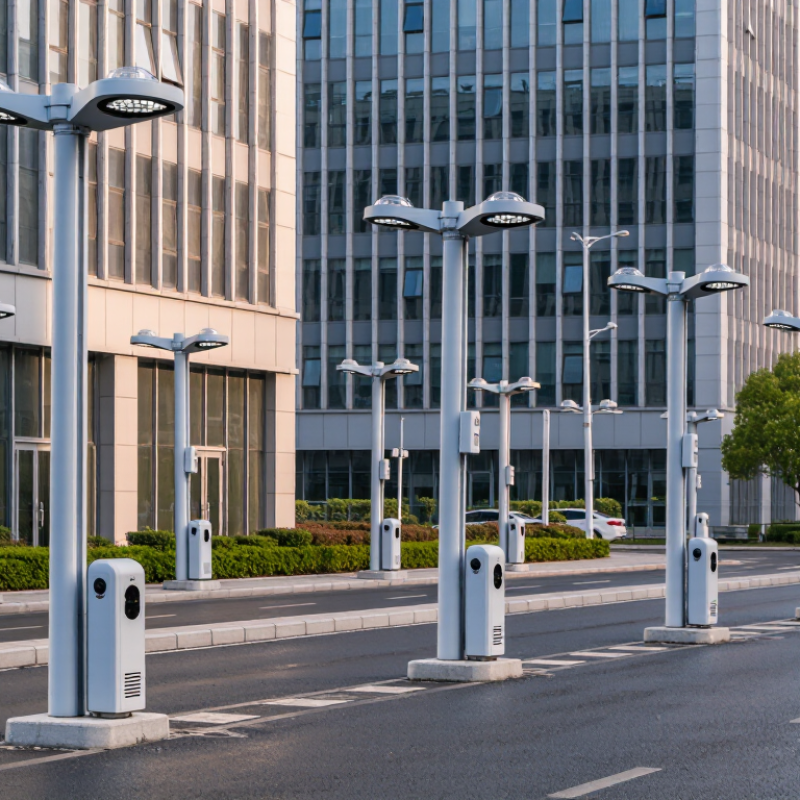
An intelligent pole is a streetlight that also hosts connected equipment. It may combine an LED fixture, environmental sensors, a communications unit, and a local controller. At dusk, a photocell can trigger lighting; motion sensors may adjust brightness when streets are quiet. The controller sends status data, such as lamp faults or energy use, to a remote management platform. That sounds simple. In practice, devices from different suppliers may not communicate smoothly, and network coverage can vary from one block to the next.
The United Nations Department of Economic and Social Affairs projected that 68% of the world’s population would live in urban areas by 2050 in World Urbanization Prospects: The 2018 Revision. This growth increases pressure to manage public infrastructure efficiently, though it does not make every pole “smart” by default. The U.S. Department of Energy reports that LED streetlights can use at least 50% less energy than conventional lighting technologies; actual savings depend on the existing fixtures and operating settings. A useful deployment therefore measures energy use and maintenance before and after installation. Sensors also raise practical questions: who can access their data, how long it is retained, and whether each sensor serves a clear public need.
Core Technologies and Applications of Intelligent Poles
An intelligent pole combines street lighting with sensors, communication equipment, and control units. LED fixtures can adjust brightness according to schedules, movement, or ambient light. Small environmental sensors may track temperature, noise, and particulate levels. The pole becomes useful infrastructure, not just a lamp post. But only when its systems work together.
Edge computing can process selected data locally, reducing delays and unnecessary network traffic. Traffic sensors can help operators understand vehicle flow, while connected lighting can respond to changing street activity. In public spaces, cameras and other monitoring tools need careful placement and transparent data practices. Technology alone does not create trust.
Applications vary by location. A busy intersection may use traffic monitoring and adaptive lighting; a quieter road may need only efficient illumination and equipment fault alerts. Modular designs can make upgrades easier, though extra devices add weight, power demand, and maintenance work. This trade-off is easy to underestimate. Operators should check network coverage, weather resistance, repair access, and compatibility before deployment. A neat pilot installation may still reveal practical problems after months of rain, dust, and routine servicing. The strongest intelligent-pole projects begin with a clear local need and measurable performance targets.
Assess manufacturers by test evidence, not polished renderings. The International Energy Agency reported that global electricity demand rose 2.2% in 2023 in its Global Energy Review 2024. That makes energy claims worth checking carefully.
Ask suppliers for measured power use at different dimming levels, not just rated wattage. Request a sample control log showing brightness, fault alerts, and communication uptime. Compare those results under the same operating schedule. A sensor that misses pedestrians in rain is not intelligent enough.
Check the pole as a complete outdoor system. Review structural calculations, corrosion protection, thermal management, and access to wiring and service panels. Ask for ingress-protection test records against IEC 60529 and corrosion-test details referencing ISO 9227. Confirm that cameras, radios, and lighting remain stable when installed together.
One test can still miss real street conditions. A winter field trial helps. So does a hot-weather test. Inspect a pilot site in person, and check whether technicians can replace a failed module without dismantling the whole pole.
No scorecard is perfect. I would also verify warranty exclusions, spare-parts lead times, and software update procedures in writing; these details are easy to overlook, and I have not found one metric that captures them all.
China’s intelligent-pole manufacturers serve a fast-changing urban infrastructure market. Their products can combine street lighting, cameras, environmental sensors, public Wi-Fi, and 5G equipment on one pole. Yet integration quality varies. A crowded cabinet or poorly planned cable route can complicate maintenance long after installation.
These ten profiles compare manufacturers through practical capabilities: pole design, equipment integration, project delivery, and ongoing support. Some suppliers focus on modular structures that simplify upgrades; others emphasize control platforms or customized solutions for roads, campuses, and industrial parks.
Buyers should check wind-load calculations, corrosion protection, access-panel placement, and compatibility with existing systems. Details matter. A polished demonstration does not always reveal how quickly a faulty sensor can be replaced.
The scale of China’s communications infrastructure provides useful context.
The Ministry of Industry and Information Technology reported 4.25 million 5G base stations nationwide by the end of 2024 in its communications industry statistics.
This expanding network creates opportunities for connected street infrastructure, but it does not guarantee commercial success for every pole project. Site conditions, power availability, and clear responsibility for maintenance still shape results. Some project specifications remain optimistic about lifecycle costs; independent field data is not always easy to compare.
Choosing an intelligent pole manufacturer in China starts with the project, not a product catalogue. Define what the pole must support: street lighting, cameras, environmental sensors, emergency buttons, or public Wi-Fi. Ask for drawings showing load limits, cable routes, access doors, and foundation requirements. A neat render helps. It proves very little.
Check how the supplier handles integration. Request interface details, compatible power and communication options, and a sample test plan. Ask how the pole performs in local wind, rain, heat, and coastal conditions. Review material specifications and inspection records, not just promotional claims. If possible, inspect a production sample or arrange a third-party quality check. Small details matter, such as whether a technician can reach wiring without removing several devices.
Then compare delivery capability and after-sales support. Confirm production lead times, spare-part availability, warranty terms, and who responds when a sensor fails. Ask for references from projects with similar requirements, and verify the scope of each reference. Price matters, but a lower quote can omit installation support or testing. I would not treat a polished presentation as proof of manufacturing strength. It is only a starting point. A clear, detailed answer is often more useful than a perfect-looking brochure.
Brand-neutral procurement guide: the ten rows below are selection criteria, not a ranking of named manufacturers. Treat the benchmarks as project-specific checks and confirm requirements against applicable regulations, site conditions, and contract documents.
| No. | Evaluation Dimension | What to Verify | Practical Benchmark or Check |
|---|---|---|---|
| 1 | Product Integration | Check whether the supplier can integrate lighting, cameras, communication equipment, sensors, and emergency-call devices into a coordinated pole design. | Request a system architecture drawing, equipment list, interface schedule, and a demonstration of the proposed configuration. |
| 2 | Structural Design | Review pole dimensions, material specifications, foundation details, wind-load calculations, and provisions for equipment weight and maintenance access. | Require project-specific calculations based on local wind conditions, soil information, pole height, and the final equipment configuration. |
| 3 | Outdoor Protection | Verify protection ratings for enclosures and installed equipment, including seals, cable entries, corrosion protection, and drainage details. | Check IP ratings against IEC 60529. Select the rating according to the equipment location and exposure; do not assume every component shares the same rating. |
| 4 | Impact and Vandal Resistance | Ask for documented impact-resistance ratings for exposed housings and components, and confirm that the test applies to the offered product configuration. | Where impact resistance is required, review the applicable IK rating under IEC 62262 and match it to the site's risk and access conditions. |
| 5 | Electrical and EMC Safety | Review electrical diagrams, grounding and bonding arrangements, surge-protection design, and test documentation for the supplied electrical and electronic equipment. | Request test reports and applicable conformity documentation for the actual equipment. Confirm electrical safety and EMC requirements for the project and destination market. |
| 6 | Connectivity and Compatibility | Confirm supported wired and wireless interfaces, network requirements, device protocols, bandwidth assumptions, and compatibility with the owner's existing platform. | Obtain an interface-control document and test the required devices and data flows before mass production or site deployment. |
| 7 | Software and Data Security | Clarify user access controls, encryption, software-update procedures, system logs, data ownership, and responsibilities for cybersecurity maintenance. | Request a written security specification and lifecycle support plan. Assess privacy and data-handling requirements applicable to the deployment location. |
| 8 | Manufacturing and Quality Control | Review the quality-management process, incoming-material checks, welding and coating inspections, assembly controls, and final product testing. | Verify current quality-management certificates directly with the issuing body where applicable, and request inspection records for comparable products. |
| 9 | Customization and Delivery | Check engineering-change procedures, drawing approval, prototype capability, production capacity, packaging, and delivery planning. | Ask for a project schedule with design approval, sample inspection, production, factory acceptance testing, and shipment milestones. |
| 10 | Warranty and Lifecycle Support | Confirm warranty scope, spare-parts availability, repair arrangements, software support, response process, and responsibility for third-party devices. | Compare written warranty terms and request a support plan that identifies service contacts, covered components, exclusions, and expected spare-parts availability. |
Leave your projects details, and one of our team will reach out to answer any questions you may have