
For global buyers, selecting an Insulated Thermos involves more than comparing capacity and appearance. A suitable model must protect drink temperature through long commutes, outdoor work, shipping delays, and changing climates. Vacuum insulation remains the core technology. Sir James Dewar, the Scottish physicist whose research enabled modern vacuum flasks, is often associated with this practical principle: “A vacuum is the best insulator.” His work still influences today’s stainless-steel bottles.
This guide examines ten Insulated Thermos types for different purchasing needs. The comparison considers vacuum performance, stainless-steel grade, lid security, mouth width, leak resistance, cleaning access, and packaging durability. A 500-milliliter bottle may suit office users. A larger model may better serve drivers, construction teams, or family travel. Small details matter. A loose seal can ruin a product’s reputation.
Global buyers should also examine supplier consistency, food-contact documentation, factory quality control, and realistic delivery capacity. Marketing claims can sound impressive. They are not always enough. Some bottles retain heat well but feel uncomfortable in one hand. Others look premium but hide difficult-to-clean lid channels. That weakness deserves attention.
The best choice depends on actual use, not only laboratory numbers. Buyers may need to test samples across several days and temperatures. Even reliable products have limits. A thermos left open repeatedly will cool faster. A damaged vacuum wall cannot be repaired easily. This overview aims to support careful decisions, while recognizing that no single Insulated Thermos fits every market, user, or supply chain.
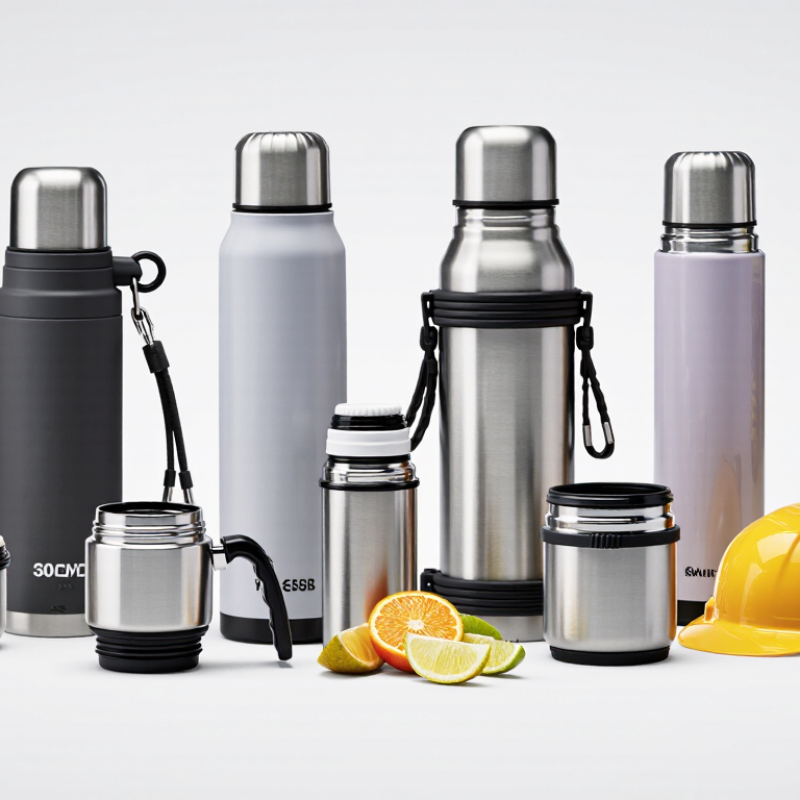
An insulated thermos is a reusable vessel designed to slow heat exchange between contents and surrounding air. Common constructions include double-wall vacuum flasks, foam-insulated bottles, and reflective-lined containers. Vacuum designs usually provide the strongest thermal barrier. Why?
Two walls create a narrow space with very little air. Removing most air reduces conduction and convection. Reflective surfaces can also limit radiant heat transfer. The stopper matters too. Every gap around the lid becomes a small escape route. A thin steel wall may feel cool, while the drink inside remains hot.
US$8.9 billion Grand View Research valued the global vacuum-insulated products market at about US$8.9 billion in 2023. Its 2024 report projects roughly 6.6% annual growth through 2030. This demand reflects practical use across commuting, outdoor work, food service, and travel. However, market growth does not guarantee equal performance.
Testing should consider starting temperature, fill volume, lid design, and opening frequency. A half-filled flask often loses heat faster than a full one. Cold surfaces also affect results. In practical checks, a good flask should show limited temperature loss after several hours, but no thermos is perfect. Some product claims sound impressive, yet independent testing is still necessary. That part is often overlooked.
(Grand View Research, Vacuum Insulated Products Market Report, 2024)
Top 10 Insulated Thermos Types for Global Buyers
The Ten Main Types of Insulated Thermos for Global Buyers
Global buyers now compare ten main insulated thermos types for different routines. Grand View Research valued the reusable water bottle market at about USD 8.64 billion in 2023. It forecasts a 4.7% compound annual growth rate from 2024 to 2030. This growth reflects demand for durable, reusable drinkware, but market forecasts are not purchasing instructions.
The classic vacuum flask suits tea, coffee, and long-distance travel. A travel mug fits vehicle holders and office desks. Sports bottles need one-hand lids, grip surfaces, and fast-flow openings. Wide-mouth bottles simplify cleaning and adding ice. Food jars protect soup, rice, or oatmeal during workdays. Insulated growlers serve cold beverages at outdoor events. Kids’ thermos bottles usually need lighter bodies and leak-resistant caps. Straw bottles support walking and gym use. Tumbler-style thermos products offer broad openings and easy sipping. Compact flask bottles work for short commutes and small bags.
Performance depends on more than the product name. Independent testing should examine heat retention, leak resistance, lid durability, and coating safety. The ASTM F2368 standard provides a test method for thermal performance in insulated containers, although buyers should check the exact product scope. Stainless steel often improves impact resistance, while plastic components can reduce weight. My practical concern is cleaning access; narrow necks may preserve temperature but trap residue. A longer heat-retention claim is not always better if the cap becomes difficult to replace.
Representative midpoint capacity of the ten main insulated thermos formats commonly used in international markets.
The values are practical market-reference estimates based on commonly available product formats and are not associated with any specific company or brand.
Top 10 Insulated Thermos Types for Global Buyers
Key Materials, Designs, and Performance Differences
Insulated thermos performance starts with its materials. Double-wall stainless steel offers strong impact resistance and reliable heat retention. Vacuum insulation usually performs better than simple air gaps. Copper-lined models transfer heat quickly, but they may cost more and need careful surface protection. Glass-lined interiors preserve taste well, although they can crack after a hard drop. Ceramic-coated interiors reduce metallic aftertaste. They are pleasant for coffee and tea. Foam-insulated plastic bottles are lighter, but they generally lose heat sooner.
Design changes daily performance. Wide-mouth bottles suit ice cubes, thick soups, and easier cleaning. Narrow-mouth models reduce spills and often retain heat slightly better. Travel tumblers need secure lids and stable bases for vehicle use. Food jars use shorter, wider bodies and thicker walls. Collapsible insulated containers save space, yet their flexible parts may weaken with repeated folding. Vacuum flasks with pressure-release lids can improve safety when holding very hot liquids.
From product testing experience, lid quality often matters as much as the vessel. A thin gasket can leak, even when the steel body is excellent. Powder-coated exteriors improve grip, but scratches remain possible. For cold climates, choose thicker insulation and a low-conductivity lid. For humid regions, inspect seals and corrosion resistance carefully. No design wins everywhere. A heavier thermos may retain heat longer, but commuters may stop carrying it. Temperature claims also need caution because opening frequency, fill volume, and liquid type change results.
| No. | Thermos Type | Typical Materials | Insulation & Design | Typical Capacity | Indicative Temperature Retention | Main Advantages | Common Trade-Offs |
|---|---|---|---|---|---|---|---|
| 1 | Double-Wall Vacuum Bottle | Food-grade stainless steel, usually 18/8 or 18/10; polypropylene or silicone lid parts | Sealed vacuum gap between two metal walls; narrow or medium mouth; screw or sports cap | 350 ml–1.5 L | Hot: about 12–24 hours Cold: about 18–36 hours | Strong overall thermal performance, durable, reusable, and suitable for daily beverages | Higher weight than single-wall bottles; steel may retain beverage odors if poorly cleaned |
| 2 | Glass Vacuum Flask | Borosilicate glass inner flask, plastic or stainless outer shell, silicone seals | Vacuum-insulated glass liner; often includes a protective outer housing and pouring stopper | 500 ml–1.2 L | Hot: about 8–18 hours Cold: about 12–24 hours | Neutral taste, easy visual inspection, and good resistance to beverage flavor transfer | Fragile if dropped; generally less suitable for heavy outdoor or industrial use |
| 3 | Insulated Travel Mug | Stainless steel or ceramic-coated steel body; BPA-free plastic lid; silicone gasket | Double-wall vacuum construction with a drinking aperture, sliding cover, or flip lid | 250 ml–750 ml | Hot: about 4–8 hours Cold: about 6–12 hours | Fits many vehicle cup holders and supports one-handed commuting use | Shorter retention than a dedicated flask; lid openings may reduce leak resistance |
| 4 | Wide-Mouth Vacuum Bottle | Stainless steel body, polypropylene cap, silicone sealing ring | Vacuum insulation with a wide opening for ice, thicker liquids, and easier cleaning | 500 ml–2 L | Hot: about 10–24 hours Cold: about 18–36 hours | Easy filling and cleaning; accommodates ice cubes and larger beverage portions | Wider opening can allow more heat exchange while drinking; may be bulky in small cup holders |
| 5 | Insulated Food Jar | Stainless steel inner and outer walls, polypropylene lid, silicone gasket | Vacuum-insulated wide body with screw lid; designed for upright storage of solid or semi-solid food | 300 ml–1.5 L | Hot food: about 6–12 hours Cold food: about 8–16 hours | Useful for soups, stews, oatmeal, rice, and other prepared meals; broad opening simplifies serving | Not optimized for drinking; larger lid and wide body may increase packing space |
| 6 | Insulated Sports Bottle | Stainless steel or double-wall plastic, silicone mouthpiece, polypropylene cap | Vacuum or foam insulation with a flip-top, straw, or push-button drinking system | 500 ml–1.2 L | Hot: about 6–12 hours Cold: about 12–24 hours | Fast access during exercise; often designed with carry loops and impact-resistant finishes | More lid components require cleaning; straw systems may be less suitable for hot liquids |
| 7 | Insulated Water Jug | Stainless steel or high-density polyethylene outer body; polypropylene handle and lid | Large-capacity vacuum or foam insulation; handle, shoulder strap, and sometimes a dispensing spout | 1.5–5 L | Cold: about 18–36 hours Hot: about 8–18 hours | Suitable for group activities, outdoor work, travel, and long periods away from a refill point | Heavy when full; large dimensions and higher shipping volume affect logistics costs |
| 8 | Insulated Beverage Growler | Stainless steel body, stainless or polypropylene cap, silicone gasket | Wide-mouth vacuum design with a pressure-resistant screw cap; intended for larger beverage volumes | 1.0–2.0 L | Cold: about 12–24 hours Carbonation preservation: depends strongly on cap seal and filling method | Good for transporting cold beverages and reducing the use of disposable containers | Not all models are suitable for hot liquids; pressure buildup requires appropriate cap design |
| 9 | Copper-Lined Vacuum Flask | Stainless steel walls with a thin copper layer in the vacuum space; stainless or polymer lid | Vacuum insulation enhanced by a reflective copper layer that reduces radiant heat transfer | 350 ml–1.5 L | Hot: about 14–30 hours Cold: about 20–40 hours | Can provide excellent thermal retention when manufacturing quality and vacuum integrity are high | Usually costs more; performance still depends on fill level, lid design, and ambient conditions |
| 10 | Foam-Insulated Plastic Thermos | Food-contact polypropylene or Tritan-type plastic, polyurethane foam or air-insulating layer | Double-wall non-vacuum construction; often includes a lightweight screw or pour-through lid | 500 ml–2 L | Hot: about 4–10 hours Cold: about 8–18 hours | Lightweight, impact-tolerant, and often more economical for large-volume distribution | Generally lower thermal performance and shorter service life than quality vacuum stainless models |
How to Choose the Right Thermos for Use, Market, and Budget
Choosing a thermos starts with use, not appearance. The main options include stainless-steel vacuum, double-wall, copper-lined, glass vacuum, ceramic-lined, food-jar, wide-mouth, slim, self-heating, and children’s models. Stainless steel usually suits transport and wholesale markets because it resists impact. Glass preserves taste well, but it needs protective packaging. Food jars need wider openings, while slim bottles fit narrow vehicle holders. Small details matter.
Grand View Research reported that the global reusable water bottle market reached about USD 8.18 billion in 2023. Its forecast also expects continued growth through 2030. This supports demand for durable, reusable drinkware, but market demand varies. In hot regions, buyers may prioritize longer heat retention. In offices, lighter weight and leak control often matter more. For budget channels, a basic double-wall model may outperform an expensive self-heating design. I have seen buyers overvalue temperature claims and undervalue lid durability. That mistake becomes expensive after shipping.
Tips: Check insulation performance with a controlled test, not only supplier claims. Compare hot and cold retention after six, twelve, and twenty-four hours. Review food-contact documentation for the destination market. The European Commission and U.S. FDA both publish relevant safety guidance, but requirements differ. Ask for material certificates, leak-test results, carton dimensions, and replacement-lid availability. A cheaper unit can create higher costs through returns. Sometimes, the simplest thermos wins.
Insulated thermos products differ by structure, capacity, and intended use. Vacuum flasks, travel mugs, food jars, growlers, and wide-mouth bottles serve different supply needs. Buyers should inspect steel grade, inner coatings, gasket materials, and closure strength. A smooth rim matters when users drink directly from the bottle. Small defects become costly returns.
Safety checks should match the destination market. Request food-contact documentation, migration test reports, and material declarations for every component. Check the lid, seal, paint, and silicone ring, not only the metal body. Leak testing should include heat, cold, shaking, and repeated opening. Thermal claims need measured results, with test conditions clearly recorded. Certificates help, but they do not replace factory audits or sample inspections. That is easy to overlook.
Customization may include color, logo placement, volume marks, packaging, handles, and replacement parts. Laser marking can resist wear, while printed graphics may need abrasion testing. Ask for a pre-production sample before approving a large order. Import planning also requires accurate carton dimensions, net weight, product descriptions, and tariff classification. Confirm labeling, language, recycling marks, and packaging rules with a local customs specialist. Requirements change. Build time for revisions. A practical mistake is ordering popular colors before checking seasonal demand, storage limits, and destination preferences.
Leave your projects details, and one of our team will reach out to answer any questions you may have