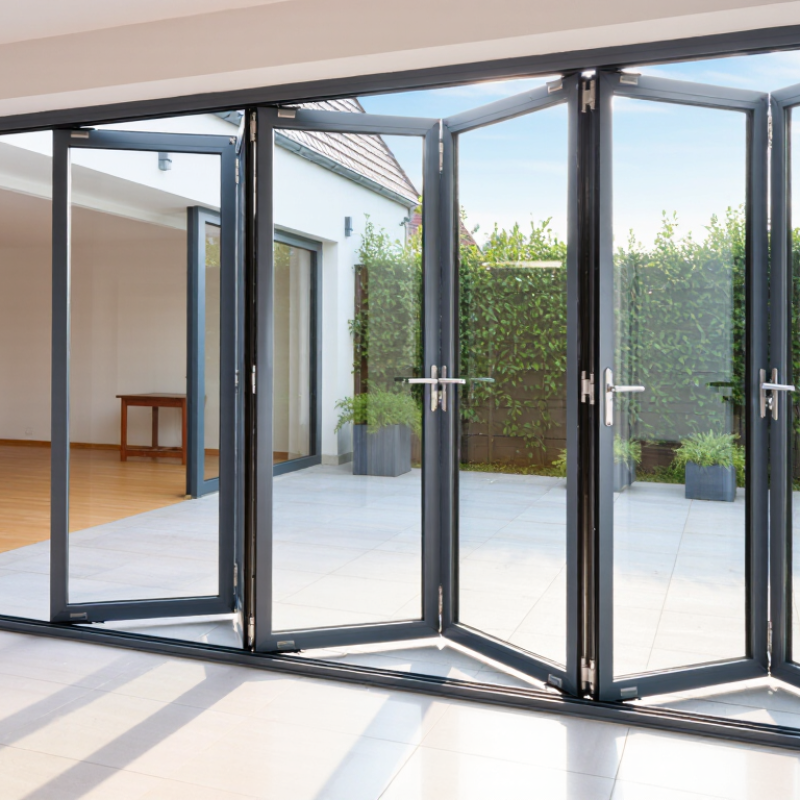
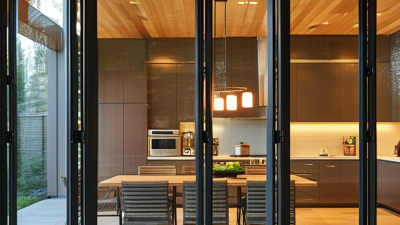
China Top Bi Folding Doors Suppliers How to Choose?

Choosing reliable China top bi folding doors suppliers requires more than comparing online prices. A supplier may show polished showroom photographs, yet the real test appears in a factory, a production record, and a completed installation. This guide examines how buyers can evaluate bi folding doors with practical, evidence-based criteria.

Look closely at the aluminum profiles, thermal breaks, glass specifications, hinges, rollers, and locking systems. Ask for test reports, material grades, warranty terms, and details about water resistance, air infiltration, and wind performance. A dependable manufacturer should explain these points clearly. They should also support relevant building codes and safety requirements in your market. Samples can reveal rough edges, uneven powder coating, or stiff movement. Small faults often become expensive problems later.

Supplier verification should include factory videos, independent inspections, reference projects, and communication records. Request a written quotation with packaging, lead time, replacement parts, and delivery responsibilities clearly stated. A low price can look attractive. It may conceal weaker hardware or limited after-sales support. However, expensive does not automatically mean superior. No checklist is perfect. I have seen attractive samples perform differently after months of use, especially in coastal climates. For this reason, buyers should test realistic conditions and keep technical promises in writing. The best supplier is not always the largest one. It is the partner that answers difficult questions, admits limitations, and improves when problems appear.

China Top Bi Folding Doors Suppliers How to Choose?

Understanding China’s Bi-Folding Door Manufacturing Market

China’s bi-folding door manufacturing market serves residential, commercial, and renovation projects worldwide. Suppliers may offer aluminum, thermal-break, and customized glass systems. However, factory size alone does not prove manufacturing quality.

During supplier evaluation, inspect extrusion quality, powder coating consistency, hardware assembly, and weather-seal design. Ask for production photos, test records, and sample sections before placing a large order. A reliable manufacturer should explain load limits, panel alignment, drainage paths, and installation tolerances clearly. In practical projects, a small measurement error can create difficult operation or water leakage. I have found that detailed drawings often reveal more than polished sales presentations. Still, drawings can be incomplete, so request revisions when dimensions seem unclear.

Tips: Compare at least three suppliers using the same specifications. Check glass thickness, opening direction, panel weight, warranty terms, and replacement-part access. Request a physical sample when the project has wide openings or coastal exposure. Ask whether factory inspection is available before shipment. Do not rely on catalog photographs. They can hide weak corners, uneven gaps, or poor finishing. A supplier may also promise fast customization, yet unusual colors and oversized panels can extend production time. Confirm every detail in writing, including packaging, delivery responsibilities, and installation guidance. A careful choice may take longer, but rushed selection often creates costs that are harder to repair.

Key Features to Compare Among Chinese Bi-Folding Door Suppliers

When comparing Chinese bi-folding door suppliers, examine more than photographs and quoted prices. Ask for tested data on thermal insulation, air leakage, water resistance, and wind performance. These details matter in a real home, especially during heavy rain or winter heating. Request the glass specification, frame alloy, surface treatment, and hardware grade. A sample corner should open smoothly without scraping or excessive movement.

Installation planning is equally important. Experienced suppliers can provide opening measurements, drainage details, threshold options, and packing instructions. Check whether the panels are labeled clearly and whether replacement rollers, handles, and seals remain available. A supplier should explain production tolerances instead of promising impossible perfection. Ask for inspection records, quality-control photographs, and a clear response process for damaged goods. Reliable communication is practical evidence of professionalism.

Customization can improve performance, but it may also increase lead time and maintenance needs. Large panels look impressive, yet they require stronger rollers and more careful installation. I have found that a beautiful showroom sample can hide weak sealing at the bottom track. That deserves attention.

Compare warranty terms, installation guidance, payment milestones, and delivery protection in writing. Independent testing documents are useful, but they should match the exact door system you will receive. Small differences in glass thickness or hardware can change daily operation. Evaluate the supplier’s technical answers, not only their sales language.

How to Evaluate Materials, Designs, and Technical Specifications

When comparing China’s top bi-folding door suppliers, begin with materials, not showroom styling. Aluminum profiles should state alloy, wall thickness, thermal-break design, and surface treatment. For coastal projects, request corrosion-test evidence and drainage details. Insulated glass should identify pane thickness, spacer type, gas fill, and low-emissivity coating. Small omissions matter. The U.S. Department of Energy reports that windows can cause 25–30% of residential heating and cooling energy use. The IEA’s 2023 Energy Efficiency report also identifies buildings as responsible for around 30% of global final energy consumption.

Evaluate designs through measured performance. Ask for U-factor, solar heat gain coefficient, visible transmittance, air leakage, water penetration, and structural test results. NFRC rating guidance supports comparing certified U-factor and SHGC values, rather than trusting isolated claims. For large openings, check panel weight, hinge capacity, roller adjustment, locking points, and maximum tested dimensions. Request testing to recognized methods, including ASTM E283, E331, and E330, or equivalent national standards. A supplier should explain the test setup clearly.

Design also means daily handling. Inspect a full-size sample, open it repeatedly, and check whether panels remain aligned. Examine threshold height, track cleaning, gasket replacement, and emergency access. My procurement reviews often find attractive quotes hiding installation assumptions. Still, this method has limits. Laboratory results cannot predict every building movement or installer error. Ask for project references, maintenance instructions, drawings, and written tolerances. A perfect specification sheet does not exist. Honest gaps deserve questions.

China Top Bi Folding Doors Suppliers How to Choose? - How to Evaluate Materials, Designs, and Technical Specifications

Evaluation Dimension Key Data or Benchmark What to Check with the Supplier Recommended Evaluation
Frame Material Aluminium is commonly selected for large bi-fold door panels because it is lightweight, corrosion-resistant, and dimensionally stable. Confirm the aluminium alloy, surface-treatment process, profile drawings, and whether the system is designed for exterior use. High priority
Aluminium Profile Thickness Residential systems commonly use profiles in approximately the 1.4–2.0 mm range, but the required size depends on panel width, height, glass weight, and wind exposure. Request profile cross-sections and structural calculations rather than evaluating thickness alone. Verify by project
Thermal Break Thermally broken aluminium uses a low-conductivity polyamide strip between the interior and exterior aluminium sections to reduce heat transfer. Check the thermal-break material, strip width, continuity around the frame, and declared whole-door U-value. Essential for conditioned spaces
Glass Configuration Double glazing is widely used for residential applications; low-emissivity coatings and inert-gas filling can improve thermal performance when correctly specified. Confirm glass thickness, glazing configuration, spacer type, safety-glass requirement, coating position, and gas-filling declaration. High priority
Safety Glass Tempered or laminated safety glass is generally appropriate where required by local building codes, especially in doors and areas near walking surfaces. Ask for glass certificates and confirm compliance with the destination market’s safety-glazing requirements. Code dependent
Panel Dimensions A practical panel width is often about 600–1,000 mm; maximum dimensions must be determined from hardware capacity, glass weight, profile strength, and wind load. Request maximum tested panel width, height, weight, and configuration limits for the exact hardware set. Structural check
Opening Configuration Common layouts include even or uneven panels, inward or outward opening, and left-, right-, or center-opening arrangements. Confirm the stacking direction, traffic clearance, access-panel position, threshold arrangement, and emergency egress needs. Design priority
Top-Hung or Bottom-Rolling System Top-hung systems transfer most panel weight to the head track; bottom-rolling systems transfer weight to the sill and require a suitable load-bearing floor. Check structural support, track alignment, drainage, maintenance access, and the rated load capacity of rollers and hinges. Project dependent
Hardware Load Capacity Hardware capacity must exceed the complete panel weight, including glass, with an appropriate safety margin specified by the system designer. Request the rated weight per roller, hinge, trolley, and lock, plus the permitted panel size for each configuration. Mandatory evidence
Air Permeability Performance is commonly classified under standards such as EN 12207 or tested under applicable regional standards. Lower air leakage indicates better sealing. Request the complete-door test report, test size, classification, and test pressure—not only a component claim. Compare test results
Watertightness Watertightness is commonly assessed under EN 12208 or an equivalent local standard. The required level depends on exposure, building height, and installation location. Check the water-pressure test level, drainage design, sill detail, corner joints, and whether the test represents the proposed door size. Climate dependent
Wind Load Resistance Wind resistance is commonly classified under EN 12210 or equivalent standards and depends on panel dimensions, building height, and site wind conditions. Provide project wind-load data and request structural calculations or test results for the selected configuration. Engineering required
Thermal Performance Evaluate the whole-door U-value, not only the centre-of-glass value. Lower U-values generally indicate lower heat transfer, subject to local calculation methods. Request the declared U-value, calculation method, frame and glass assumptions, spacer type, and tested or calculated door size. Compare like for like
Solar Control Solar heat-gain performance is represented by the glass solar factor or g-value, or by the equivalent SHGC used in some markets. Balance daylight, overheating risk, orientation, shading, and cooling loads instead of selecting glass by U-value alone. Climate dependent
Acoustic Performance Sound insulation depends on the complete assembly, glass composition, seals, frame joints, and installation. A tested Rw or comparable rating is more useful than glass-only data. Request the complete-door acoustic test report and confirm whether the tested configuration matches the proposed glass and panel layout. Site dependent
Threshold Design Low thresholds improve accessibility but may provide less protection against driving rain than raised or weather-rated thresholds. Confirm threshold height, drainage channels, waterproofing interface, accessibility requirements, and internal floor-level tolerances. Balance access and weather
Sealing System Continuous EPDM or equivalent weather seals, correctly compressed at corners and meeting stiles, are important for air and water performance. Check seal material, UV resistance, replacement availability, corner treatment, and compression adjustment. Inspect samples
Surface Finish Exterior aluminium finishes commonly include powder coating or anodizing. Durability depends on coating specification, pretreatment, exposure, and maintenance. Confirm coating thickness or anodizing class, colour tolerance, pretreatment process, warranty conditions, and applicable finish standard. Exterior durability
Drainage Effective sill drainage should collect and discharge water through controlled paths without allowing water to enter the interior floor zone. Review sill sections, weep-hole positions, end dams, corner seals, flashing, and compatibility with the building waterproofing system. Installation critical
Testing and Certification Relevant evidence may include air, water, wind, thermal, acoustic, cycle, and safety testing conducted on the complete door system. Verify report issuer, test date, exact product configuration, specimen dimensions, classification, and validity for the destination market. Do not accept generic reports
Operating Cycle Durability Repeated opening-and-closing tests provide useful evidence of hardware durability, but performance depends on panel weight, alignment, and maintenance. Ask for cycle-test results, lubrication requirements, roller replacement procedure, and adjustment instructions. Long-term value
Installation Tolerance Bi-fold doors require accurate opening dimensions, level tracks, plumb jambs, adequate structural support, and controlled deflection. Request installation drawings showing fixing points, allowable tolerances, head deflection limits, sill preparation, and perimeter sealing. Essential before ordering
Customization Capability Potential options include panel count, opening direction, glass type, colour, handles, thresholds, screens, and integrated blinds. Confirm which options are standard, which require engineering approval, and whether customization changes testing or warranty coverage. Check configuration limits
Maintenance and Spare Parts Routine maintenance typically includes cleaning tracks and drainage paths, checking seals, lubricating approved hardware, and adjusting rollers when necessary. Confirm spare-part availability, part numbers, service procedure, maintenance intervals, and expected support period. Important for lifecycle cost
Quotation Transparency A reliable quotation should identify dimensions, panel count, glass build-up, hardware, finish, threshold, packaging, delivery terms, and installation scope. Compare quotations using the same technical specification and request separate prices for options, shipping, installation, and after-sales service. Use a standardized brief
Warranty Terms Warranty coverage should distinguish frames, finish, glass, seals, rollers, locks, and installation workmanship. Check duration, exclusions, geographic coverage, claim procedure, maintenance obligations, and whether replacement parts remain available. Review in writing
Final Supplier Score A balanced decision should consider tested performance, engineering support, installation quality, lifecycle cost, lead time, and warranty—not price alone. Use a weighted scorecard and require technical documents before approving the supplier or placing a production order. Recommended method

Note: Performance values and classifications must be confirmed for the exact door size, glass package, hardware configuration, installation method, and destination-market building requirements.

How to Verify Supplier Quality, Certifications, and Production Capacity

Choosing China’s top bi-folding door suppliers requires more than comparing prices and showroom photos.

Start by requesting product samples, section drawings, hardware details, and recent inspection records. Check frame thickness, surface coating, glass specifications, drainage design, and folding alignment.

A reliable supplier should explain these details clearly, not hide behind sales language.

Certifications need careful verification.

Ask for the certificate number, issuing organization, validity period, and exact product scope. Contact the issuing body when possible.

A certificate alone proves little. It may cover a different product or an expired factory system.

Also review material test reports, safety documentation, and quality-control procedures. During a factory audit, observe powder coating, glass handling, assembly, and final inspection.

Small details matter.

Production capacity must be supported by evidence.

Request monthly output, equipment lists, staffing levels, and current order schedules. Compare these figures with the promised lead time.

A supplier claiming high capacity should show organized production lines and traceable records. Ask whether any work is subcontracted.

This point is often overlooked.

In practice, even a well-equipped factory can miss deadlines during peak seasons. I would test this risk with a small trial order, clear drawings, approved samples, and written acceptance standards.

Keep communication records. Mistakes happen, but vague responsibility creates larger problems.

How to Compare Prices, Services, Lead Times, and Export Support

Choosing a Chinese bi-folding door supplier requires more than finding the lowest quotation. Price comparisons should use identical specifications, including aluminum grade, thermal breaks, glass thickness, hardware, finish, and packaging. Ask for an itemized pro forma invoice. A low unit price may exclude crating, testing, port handling, or replacement parts. Request two quotations with the same opening size. This exposes hidden differences. In my experience, the cheapest offer is rarely the cheapest delivered door.

Service quality appears before payment. A capable supplier should confirm drawings, wall conditions, drainage details, and wind-load requirements. Ask who checks measurements and how revisions are recorded. Get a named contact, response-time expectation, installation guide, and spare-hardware policy. Short installation videos can reveal alignment and sealing quality. Still, photos are selective. An independent inspection before shipment may be worth its cost. Do not assume every technical promise is included.

Compare lead times by production stage, not one impressive total. Ask for dates covering drawing approval, material preparation, fabrication, inspection, and dispatch. Confirm what happens when glass or hardware arrives late. Export support should cover packing marks, commercial invoices, certificates, loading photos, and practical customs information. Verify whether the supplier has shipped to your destination and understands its documentation needs. Build buffer days. Port congestion is unpredictable. I would test one small order first. It costs more per unit but exposes weak communication early. Written records matter more than confident calls.

Before you go

Leave your projects details, and one of our team will reach out to answer any questions you may have