How to Choose the Best Wooden Doors for Your Home?
Choosing the best wooden doors for your home can significantly enhance its aesthetic. Wooden doors offer beauty, warmth, and timeless appeal. However, selecting the right one involves careful consideration.
When exploring wooden doors, consider the style, wood type, and finish. Each wood species provides unique qualities. Some are more durable, while others offer exquisite grains. The choice affects your home's overall look and value.
Reflecting on your options can feel overwhelming. You may find that popular choices don’t suit your taste. Understanding your specific needs helps focus your search. With the right approach, you can find the perfect wooden doors that complement your home and personality.
Understanding Different Types of Wooden Doors Available on the Market
When selecting wooden doors, it’s essential to understand the various types available. Solid wood doors are often prized for their durability and aesthetic appeal. They provide excellent insulation and security. According to industry reports, around 60% of homeowners prefer solid wood due to its long lifespan and classic look.
Hollow-core doors are another option. They are lighter and more affordable, yet they lack the insulation qualities of solid wood. Statistics suggest that about 30% of buyers gravitate towards hollow-core doors for budget-friendly renovations. However, they may not withstand wear and tear as effectively. Potential buyers should weigh the trade-offs carefully.
Engineered wood doors combine aesthetics with strength. They use layers of wood to enhance durability. Reports indicate that engineered doors are gaining popularity, making up about 25% of the market. These doors can resist warping better than regular wood. Yet, despite their various benefits, some consumers find it challenging to determine which type meets their specific needs. This reflection can lead to better choices in the long run.
Types of Wooden Doors and Their Popularity
This chart represents the popularity of different types of wooden doors based on market research data. It helps homeowners understand which types are most favored according to various features and styles.
Evaluating Wood Species: Durability, Appearance, and Cost Factors
When choosing wooden doors, evaluating wood species is crucial. Different types of wood offer varied durability, appearance, and cost. Hardwoods like oak and maple are more durable but often come at a higher price point. According to the American Hardwoods Export Council, oak can last over 50 years with little maintenance. This makes it a popular choice for entry doors.
Softwoods, such as pine, present a more economical option but may require more frequent replacement. A study by the USDA Forest Service indicated that softwoods average a lifespan of around 20 to 30 years. This durability gap leads homeowners to consider long-term costs when making a decision.
Additionally, the aesthetics of wood vary widely. Oak has prominent grain patterns, making it attractive for traditional designs. Conversely, smoother woods like birch fit modern homes well. Homeowners often reflect on whether their choice aligns with their overall design vision. Selecting the right wood species is not merely about durability and cost. It also demands consideration of style, potential maintenance, and personal preference. Ultimately, this decision reflects both practicality and individual taste.
Considerations for Door Size and Dimensions in Your Space
Choosing the right wooden door involves careful consideration of size and dimensions. Your door should complement your home's overall design and provide functional benefits. Measure the door frame accurately. A door that is too large can affect space and mobility, while one that is too small may offer insufficient security and aesthetic appeal.
Take note of ceiling height, especially if opting for taller doors. A door that reaches the ceiling creates a grand entrance. Think of how the door will operate in the space—swinging, sliding, or French doors each require specific dimensions. Ensure there is enough clearance for door swings or tracks.
Sometimes, the perfect door isn’t the easiest choice. A custom size might be necessary for unique spaces. This can be more costly and takes longer to produce. It’s essential to evaluate whether the investment is worth the long-term benefits. Reflect on the overall flow of your home. Will the door enhance or disrupt the ambiance? Comfort and practicality should guide your decisions. Balancing aesthetics with functionality is key.
How to Choose the Best Wooden Doors for Your Home? - Considerations for Door Size and Dimensions in Your Space
| Door Type |
Standard Dimensions (Inches) |
Material Thickness |
Ideal Use Location |
| Interior Door |
30 x 80 |
1 3/8" |
Bedrooms, Bathrooms |
| Exterior Door |
36 x 80 |
1 3/4" |
Entryways |
| French Door |
60 x 80 |
1 3/4" |
Living Rooms, Patios |
| Sliding Door |
72 x 80 |
1 3/4" |
Decks, Balconies |
| Bi-fold Door |
60 x 80 |
1 3/8" |
Closets, Dividing Spaces |
Choosing the Right Finish and Treatment for Longevity
When selecting wooden doors for your home, finish and treatment play critical roles in their longevity. According to the Wood Products Council, properly finished wooden doors can resist moisture, prevent warping, and enhance durability. A good finish acts as a barrier against environmental stressors. The finish you choose will affect not only aesthetics but also the lifespan of the door.
Oil-based stains and finishes are popular for wooden doors. They penetrate deeply and provide excellent protection against the elements. Water-based finishes, on the other hand, are eco-friendly and dry faster. However, they might not offer the same level of durability in outdoor conditions. Homeowners should consider their local climate when deciding. In fact, the National Wood Flooring Association reports that untreated wood doors can show signs of wear within just two years in harsh environments.
Regular maintenance is necessary for wooden doors to maximize their lifespan. Reapplying finish every few years helps maintain their protective barrier. Failure to do so can result in significant damage over time. A survey conducted by the American Institute of Architects found that homeowners often underestimate these maintenance requirements. Addressing this gap in knowledge is essential for ensuring the beauty and functionality of your wooden doors.
Comparing Styles: Traditional vs. Modern Wooden Door Designs
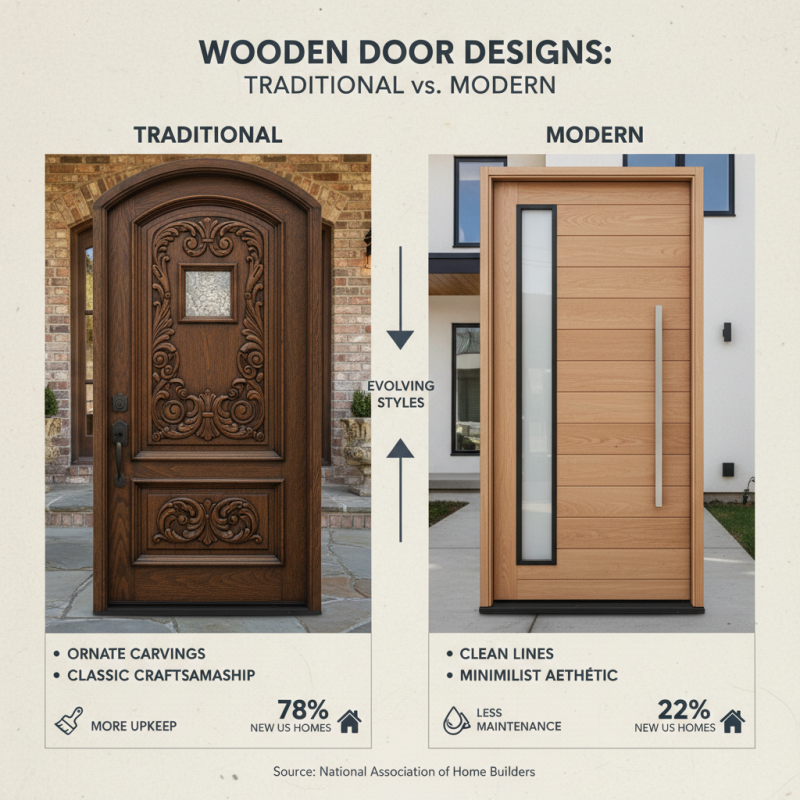
When considering wooden door styles, two distinct options emerge: traditional and modern designs. Traditional wooden doors often feature intricate carvings and ornate mouldings. They evoke a sense of nostalgia and craftsmanship. According to the National Association of Home Builders, 78% of new homes built in the U.S. incorporate traditional features. These classic doors can significantly enhance curb appeal. However, they may require more upkeep, such as regular painting or sealing.
In contrast, modern wooden doors often emphasize minimalism and functionality. They include clean lines, open spaces, and sometimes a blend of materials. A report from the American Institute of Architects revealed that modern designs are increasingly favored, with a 35% rise in preference over the last five years. These doors can provide better insulation and are generally easier to maintain. However, some homeowners feel they lack the character of traditional doors.
Choosing between these styles ultimately depends on personal taste and the overall aesthetic of the home. Reflecting on your preferences is essential. The decision isn’t just about style but also about the atmosphere you want to create. Think deeply about what each style represents for your space.