Best Aluminium Doors Manufacturer in China for Global Buyers

Choosing the best aluminium doors manufacturer in China requires more than comparing unit prices. Global buyers need clear specifications, repeatable quality, and evidence that a supplier can manage projects from sampling to shipment. A narrow profile may look elegant in a showroom, yet perform poorly if its thermal break, seals, or drainage details are overlooked. Small details matter.

Fenestration consultant Lin Wei puts the selection principle this way: “Judge a door by the system behind it, not by the frame alone.” Buyers should ask for drawings, alloy and finish details, hardware brands, test reports, and written quality-control procedures. Check whether the stated wind-load, water-tightness, and air-leakage performance matches the intended building and local project requirements. Do not assume one test result applies to every size or configuration.

A capable manufacturer should explain its production process plainly. Ask how it checks profile dimensions, coating consistency, corner joints, glass installation, and protective packaging. For example, inspect a sample corner joint and confirm that films protect the finish during handling. Request photographs or records from comparable projects, while verifying references independently where possible. Be cautious of vague claims such as “top quality” without supporting documents.

Price still matters. So do lead times, replacement parts, communication, and after-sales support. One imperfect point deserves attention: even a well-made door can disappoint when installation is poor or site measurements are wrong. This outline will help buyers compare Chinese suppliers, assess product evidence, and prepare practical questions before placing an order. It cannot replace project-specific technical review.
Best Aluminium Doors Manufacturer in China for Global Buyers

Overview of China's Aluminium Door Manufacturing Industry

China’s aluminium door industry brings together extrusion, hardware, glass processing, coating, and assembly across regional manufacturing networks. Many suppliers serve domestic construction and overseas projects, but their capabilities vary. Guangdong, particularly Foshan, has a dense building-material supply chain, while other provinces also host experienced manufacturers. This concentration can shorten sourcing cycles. It can also make supplier comparisons harder.

A door’s performance depends on more than profile thickness. Thermal-break design, gasket fit, corner joints, drainage paths, and glass specifications all affect comfort and durability. Buyers can compare technical drawings, hardware schedules, and documented air, water, and wind test results against the project’s conditions. Ask how samples are inspected and how production changes are recorded. The details matter.

Factories often customize dimensions, finishes, and opening styles, but unusual specifications can extend lead times. For coastal buildings, buyers should check coating requirements and maintenance guidance rather than assume every finish resists salt exposure equally. Packaging and container loading also deserve attention; scratched frames can turn a good quotation into an expensive problem. Price differences may reflect materials, testing, service, or simply different assumptions. A factory visit or sample review helps, though neither guarantees consistent production.

Main Aluminium Door Types and Their Applications

Main Aluminium Door Types and Their Applications

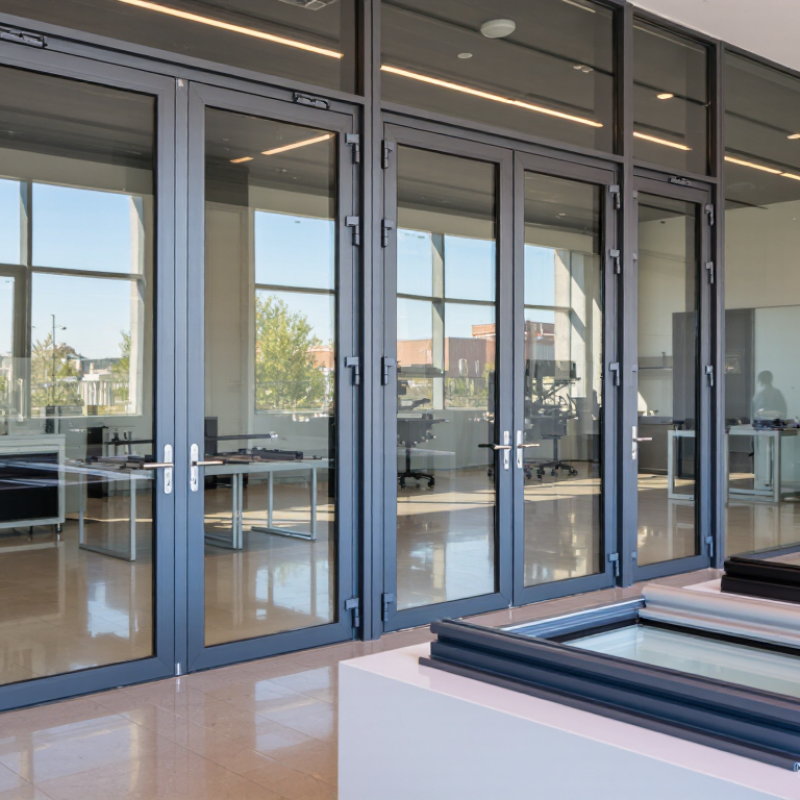
Aluminium hinged doors suit entrances, balconies, and rooms where a clear, wide opening is useful. Their familiar swing action is easy to operate, but the door needs enough clearance. Check the floor plan before choosing inward or outward opening.

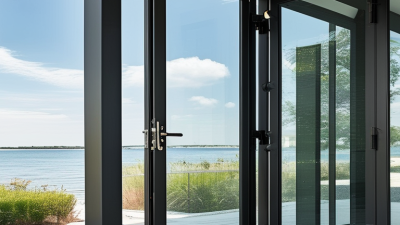
Sliding aluminium doors work well for patios and compact rooms. Their panels travel along tracks, saving swing space and framing garden or courtyard views. For busy openings, specify durable rollers and accessible track drainage.

Small details matter.

Folding doors can create a broad opening between indoor and outdoor areas, though their stacked panels need space at the side.

Pivot doors make a strong visual statement in spacious entrances, but their weight and hardware require careful planning. Match the door type to daily use, not just its appearance. Coastal exposure, wind, panel size, and expected traffic can all affect frame, finish, and glazing choices. One easy-to-miss issue is maintenance access: a beautiful track is less practical when dirt is difficult to remove. No single aluminium door suits every project, and even a carefully selected system may need adjustments after installation.

Key Features of a Reliable Manufacturer

A reliable aluminium-door manufacturer proves performance with records, not polished catalogues. Buyers should ask for alloy and finish specifications, hardware details, and batch-level inspection reports. Look for documented air-leakage, water-penetration, and wind-load tests suited to the project’s climate and building type. A neat sample is useful, but it cannot show how every production batch performs.

Thermal performance deserves close attention. The GlobalABC 2023 Global Status Report for Buildings and Construction attributes 34% of global energy demand to buildings and construction. Manufacturers should therefore provide tested thermal data, including frame and glazing configurations, rather than quoting a vague insulation claim. Check that test results match the proposed door dimensions and assembly. Small differences matter. Ask how seals, drainage paths, and thermal breaks are checked on the production line.

Responsible material handling is another useful signal. The International Aluminium Institute reports that recycling aluminium can use about 95% less energy than producing primary aluminium. Ask whether scrap is separated and whether material sources are traceable. Reliable suppliers also confirm packaging, lead times, spare-part availability, and remedies for defects in writing. No factory is flawless. What matters is whether it records problems, explains corrective action, and lets buyers verify the result before shipment.

Key Features of a Reliable Aluminium Door Manufacturer

Wind-load test pressures offer a standardized way to compare product performance when evaluating manufacturers for global projects.

How to use this chart: EN 12210 Classes 1–5 correspond to progressively higher test pressures. Ask manufacturers for independent test reports showing the classification achieved by the specific door system, and select a class appropriate to the project’s location and design requirements. Class Exxx represents a declared pressure above 2000 Pa.

Quality Standards and Export Capabilities

For global buyers, a manufacturer’s quality system matters as much as the door’s appearance. Ask how frame dimensions, corner joints, drainage paths, and surface finishes are checked during production. A sample inspection should include smooth operation, consistent gaps, secure hardware, and careful measurement of key profiles. Small details matter. A neat finish can still hide a poorly aligned frame.

Request test reports and confirm which standards apply to the destination market and project. Evidence may cover air leakage, water penetration, wind resistance, or thermal performance, depending on the door type and local requirements. Export readiness also means clear drawings, stable lead times, protective packaging, and accurate shipping documents. Corner guards and moisture-resistant wrapping can help reduce damage during long transit. No checklist catches everything. Buyers should confirm tolerances, finish colors, hardware specifications, and packaging details in writing before production. This step can feel repetitive, but vague approvals often create costly misunderstandings.

How Global Buyers Can Evaluate Suppliers

Best Aluminium Doors Manufacturer in China for Global Buyers
How Global Buyers Can Evaluate Suppliers

A supplier’s catalogue is only a starting point. The IEA’s 2024 Global Status Report for Buildings and Construction estimates that the sector used 32% of global energy in 2022. It also accounted for 34% of global CO2 emissions. Ask for the door’s tested U-value, air leakage, water penetration, and wind-load results—not just a general “high-performance” claim. Check that the test configuration matches your planned frame, glass, and opening size.

Look closely at production details. Request alloy and temper certificates, profile wall-thickness records, thermal-break specifications, and hardware lists. A polished sample can hide a weak corner joint. Ask for photos of actual production, inspection checkpoints, and packaging prepared for long-distance shipping. Small gaps matter. Confirm that test reports come from a competent laboratory and cover requirements in your destination market.

Material sourcing deserves scrutiny too. The International Aluminium Institute reports that recycling aluminium uses about 95% less energy than producing primary aluminium. Ask suppliers to document recycled-content claims and explain how they keep material batches traceable. Compare quotations line by line, including glazing, finish, spare parts, and delivery terms. A low price may omit costly details. One imperfect but useful check: request a sample corner section and measure it yourself.

Best Aluminium Doors Manufacturer in China for Global Buyers - How Global Buyers Can Evaluate Suppliers

Supplier evaluation framework for comparing aluminium door manufacturers. The weights below are suggested starting points, not market statistics. Confirm all requirements against the destination market, project specifications, and applicable regulations.

Evaluation Dimension Suggested Weight What to Evaluate Evidence to Request Practical Review
Product compliance and testing 18% Check whether the proposed door system has test results and documentation relevant to the intended use and destination market. Performance needs depend on local codes, building type, climate, and project specifications. Current test reports, product specifications, certificates where applicable, and confirmation that the tested configuration matches the quoted door, glazing, hardware, and dimensions. Verify report scope, issuing laboratory, test date, and product configuration. Do not assume one report covers every size or design.
Design and performance fit 14% Compare thermal performance, air leakage, water penetration, wind-load resistance, acoustic performance, security, and accessibility requirements where relevant. Door schedules, technical data sheets, system drawings, calculation or test information, glazing details, and proposed thresholds and seals. Set project-specific acceptance targets before comparing quotations; there is no single performance target suitable for every project.
Aluminium and component quality 12% Confirm the specified aluminium alloy and temper, profile dimensions, wall thickness, surface finish, glazing method, seals, fasteners, and hardware suitability. Material declarations, profile drawings, finish specifications, component schedules, and sample sections or finished samples. Compare the delivered specification with the approved drawings and bill of materials, rather than relying on appearance alone.
Manufacturing quality control 12% Assess documented inspection procedures for incoming materials, fabrication, assembly, finishing, glazing, and final product checks. Quality procedures, inspection records, nonconformance and corrective-action process, and an applicable quality-management certificate if available. Check the certificate’s validity and scope with its issuer. A quality-management certificate does not by itself prove product performance.
Production capacity and lead time 10% Determine whether the supplier can meet the required quantity, customization, production sequence, and delivery schedule. Written production plan, confirmed lead-time assumptions, capacity information, approval milestones, and contingency arrangements. Clarify when lead time starts, including drawing approval, deposit, material availability, and sample approval.
Customization and engineering support 9% Evaluate the ability to provide project-specific dimensions, opening configurations, finishes, glazing options, hardware, and coordinated technical drawings. Shop drawings, revision-control process, sample process, technical response times, and records of design approvals. Agree who is responsible for final measurements, code checks, installation details, and approval of revisions.
Packaging and export readiness 8% Review protection against handling and transit damage, packaging suitability for the shipping method, labeling, and export-document capability. Packaging specification, photographs or samples of packing, packing list format, and a list of export documents the supplier can provide. Specify protection for glass, corners, surfaces, and hardware, and define how transit damage will be documented and handled.
Commercial terms and landed cost 7% Compare quotation scope, payment milestones, tooling or sample charges, freight assumptions, taxes, duties, and other costs that affect the delivered price. Itemized quotation, payment schedule, stated currency, delivery term and named place, and a clear list of exclusions. Compare quotations on the same scope and delivery basis. Confirm responsibilities under the agreed Incoterms® rule.
Warranty and after-sales support 5% Review warranty coverage, exclusions, claim process, replacement-parts availability, and support for installation or product issues. Written warranty terms, claims procedure, spare-parts list, and named support contacts and response process. Confirm warranty duration and coverage in writing; check how claims are handled across borders.
Communication and project management 5% Assess clarity and consistency of technical communication, document control, response handling, and escalation arrangements. Named project contact, communication schedule, document register, and written confirmation of key specifications and changes. Use a controlled specification and approval record to reduce misunderstandings during production.
Total suggested weight 100% Adjust the weights to reflect project priorities, destination-market requirements, and the buyer’s risk profile.

Before you go

Leave your projects details, and one of our team will reach out to answer any questions you may have