Choosing the 2026 best Sus201 Stainless Coils requires more than comparing attractive prices. Buyers need verified chemistry, consistent thickness, dependable surface quality, and realistic delivery terms. The World Stainless Association’s recent production statistics show continued growth in global stainless steel demand, especially across construction, household equipment, and industrial fabrication. This growth increases availability, but it also creates uneven quality between mills and traders.
Market conditions remain complicated. The World Steel Association’s Short Range Outlook identifies demand uncertainty, regional overcapacity, and changing trade patterns as major risks for steel purchasers. The OECD’s steel market analysis also emphasizes production overcapacity and fluctuating international competition. These reports support a practical conclusion: “best” does not always mean the lowest quotation. A coil with stable yield strength, clear mill certification, and accurate weight may reduce cutting losses and production delays.
Details matter here. A buyer should check whether SUS201 matches the required ASTM, EN, or JIS specification. Nickel and manganese levels can affect corrosion resistance, forming behavior, and final appearance. Surface 2B may look uniform under warehouse lighting, yet scratches can appear after slitting. A narrow tolerance can also save material during automated fabrication.
No ranking is perfect.
This guide compares leading Sus201 Stainless Coils through technical documentation, supplier experience, inspection practices, and delivered cost. It also considers export packaging, batch traceability, and after-sales response. Some online claims remain difficult to verify, and that limitation deserves honesty. Independent testing, including chemical analysis and mechanical testing, should support any serious purchasing decision.
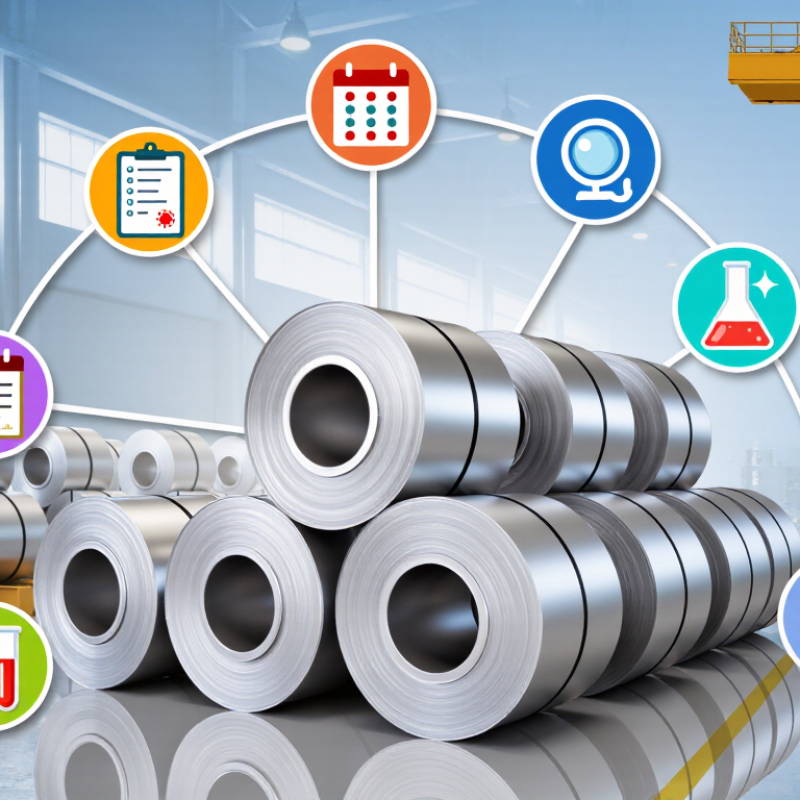
SUS201 stainless steel coil is a chromium-nickel-manganese austenitic grade used for appliances, kitchen equipment, decorative panels, and light structural parts. Its typical composition includes about 16–18% chromium, 3.5–5.5% nickel, and 5.5–7.5% manganese. Carbon, silicon, phosphorus, sulfur, and nitrogen remain controlled within applicable limits. Exact values may change by standard and product form.
SUS201 offers useful strength, good forming performance, and strong work-hardening behavior. However, its corrosion resistance is generally lower than SUS304, especially near salt, moisture, or chemical exposure. Cold rolling can also increase hardness and create slight magnetic response. Buyers should check thickness tolerance, surface finish, edge condition, and mechanical test results. Common references include JIS G4305 and ASTM A240/A240M, but certificates must match the ordered specification. In practice, I would not judge a coil by its grade label alone. Processing history matters.
Tips: Request a mill test certificate and confirm the chemical limits before purchase. Compare hardness after annealing, not only the nominal tensile strength. Inspect the surface under angled light; small pits can become obvious after polishing. Also, verify whether the coil is 2B, BA, brushed, or another finish. A careless finish comparison can distort the quotation. There is no perfect choice. Cost savings may disappear when the service environment is underestimated.
2026 Best SUS201 Stainless Coils for Global Buyers?
SUS201 stainless coils suit applications needing moderate corrosion resistance, useful strength, and controlled material cost. They are commonly supplied as cold-rolled coils for kitchen equipment, decorative panels, light industrial parts, and formed components. Their manganese-based composition can vary by specification, so buyers should request chemical reports and mechanical test results.
Common thicknesses range from about 0.3 to 3.0 millimeters, while widths often follow slitting or mill capabilities. Custom widths may reduce waste during fabrication. Typical surface finishes include 2B for general forming, BA for a brighter appearance, No.4 for brushed designs, and HL for directional lines. Surface quality should be checked under consistent lighting. Small marks can become obvious after bending.
Manufacturing normally includes melting, continuous casting, hot rolling, annealing, pickling, cold rolling, and final finishing. Slitting follows when narrower coils are required. Reliable inspection should cover thickness, width, flatness, surface condition, coil weight, and edge quality. Packaging also matters during ocean transport. Moisture damage is preventable, but not always prevented. A practical check matters: SUS201 may perform poorly in highly corrosive or salt-rich environments without suitable design protection. Buyers should match grade, finish, and process history with the actual service conditions.
2026 Best SUS201 Stainless Coils for Global Buyers?
How to Evaluate SUS201 Coil Quality for Global Purchasing
SUS201 coil quality begins with traceable documentation, not a bright surface. Request the heat number, chemical composition, mechanical results, dimensions, and applicable standard. Compare every value with the purchase specification and agreed tolerances. SUS201 is generally a manganese-rich austenitic stainless steel with lower nickel than many 300-series grades. Its corrosion performance depends strongly on the environment.
I have inspected coils where polished surfaces hid shallow pits near the edges. Use angled lighting and check the full coil width, not only the sample. Measure thickness at several points with calibrated equipment. Record width, inner diameter, outer diameter, weight, edge condition, and surface roughness when specified. A certificate alone is insufficient. Consider independent testing, including positive material identification and mechanical verification. Magnetic response may change after cold rolling, so it should not decide grade identity by itself.
Ask for production records and clear labeling on every coil. Packaging should resist moisture, protect edges, and remain readable during overseas handling. Salt spray results can help, but they cannot replace testing in the buyer’s real service environment. SUS201 may perform differently in humid coastal air, food-contact settings, or chemically exposed areas. That distinction is often missed. No inspection method is perfect. My own mistake was trusting a clean sample before checking the coil’s inner wraps. Recheck the difficult areas. That is where quality problems often remain.
SUS201 stainless coil suits buyers seeking lower material costs and useful forming performance. Its manganese and nitrogen content partly replaces nickel, changing both price and corrosion behavior. In annealed condition, it is generally ductile and often nonmagnetic. Cold forming can increase hardness and produce some magnetism. Surface quality still depends on rolling, annealing, and finishing control.
Typical applications include indoor panels, decorative trims, light kitchen equipment, furniture parts, and appliance components. It performs reasonably well in dry or mildly humid environments. It is less dependable near saltwater, chlorides, strong cleaners, and persistent condensation. Tea staining may appear around welds or cut edges. Good drainage helps. So does regular cleaning. It is not universal.
Compared with SUS304, SUS201 usually offers lower nickel cost but weaker resistance to aggressive corrosion. SUS316 provides better chloride resistance, although at a higher price. SUS430 is magnetic and useful for heat-resistant or decorative applications, but its forming behavior differs.
Global buyers should request chemical analysis, tensile data, hardness results, and surface inspection records. Confirm the applicable ASTM, EN, or JIS requirements before purchase. Coil width tolerance also deserves attention. A small mismatch can create substantial scrap during slitting.
My practical concern is simple: choosing SUS201 only by price can be a costly mistake. Its performance depends heavily on environment, fabrication, and maintenance.
International sourcing should begin with traceability, not a low headline price.
The World Stainless Association reported global stainless steel production of about 62 million tonnes in 2024. That scale creates many suppliers, but quality can vary between heats and production lines. Buyers should request the mill test certificate, heat number, chemical composition, hardness, tensile results, and surface condition. SUS201 should also match the agreed JIS specification, while ASTM A240 may support broader project acceptance.
Certification needs practical verification. ISO 9001 supports controlled production, but it does not prove every coil meets your purchase order. Ask for EN 10204 3.1 inspection documents, third-party testing when risk is high, and independent PMI checks on sampled coils.
Packaging matters too. Moisture-resistant wrapping, protected edges, and clear coil labels reduce damage during sea transport. Small details matter.
Pricing should separate base metal, processing, packing, inland freight, insurance, and duties. A cheap offer may hide narrow tolerances or uncertain delivery. Recent energy and freight volatility, highlighted in OECD steel market analysis, makes fixed assumptions risky. Request a validity period and a clear adjustment formula.
Delivery promises should include production time, port handling, customs clearance, and a realistic buffer. Seven days can become three weeks. That is not always supplier failure; sometimes the forecast was careless.
Leave your projects details, and one of our team will reach out to answer any questions you may have