
2026 Best Types of Custom Photo Frames for Buyers?

The 2026 buyer faces more choice than ever. custom photo frames now combine personal design, protective materials, and online convenience. A family portrait may need warm wood, while a monochrome wedding image may suit slim metal. The right choice depends on the photograph, room, lighting, and budget.

Market evidence supports this wider selection. Grand View Research’s Picture Frame Market Analysis Report identifies personalization and premium home décor as important growth drivers through 2030. Mordor Intelligence also reports rising demand for customized décor and online ordering experiences. These reports describe the broader picture-frame market, not every custom photo frames purchase. That limitation matters. Industry data is often fragmented, and market estimates can differ by country, product definition, and sales channel.

Professional framing advice remains valuable. Chris Paschke, a Master Certified Picture Framer and framing educator, has said, “A frame should enhance the artwork, not compete with it.” Her principle applies directly to family portraits, travel photographs, and gallery walls. A glossy black frame can strengthen a sharp city image. It may overwhelm a soft newborn photograph.

Buyers should examine archival backing, UV-filtering glazing, accurate measurements, and mounting quality. They should also question vague claims such as “museum quality.” Not every premium-looking frame protects a photograph well.

This guide compares the best types of custom photo frames for 2026. It considers material, style, preservation, customization, and practical value. Some recommendations will remain subjective. That is unavoidable. A beautiful frame still needs to feel right in the buyer’s actual room.
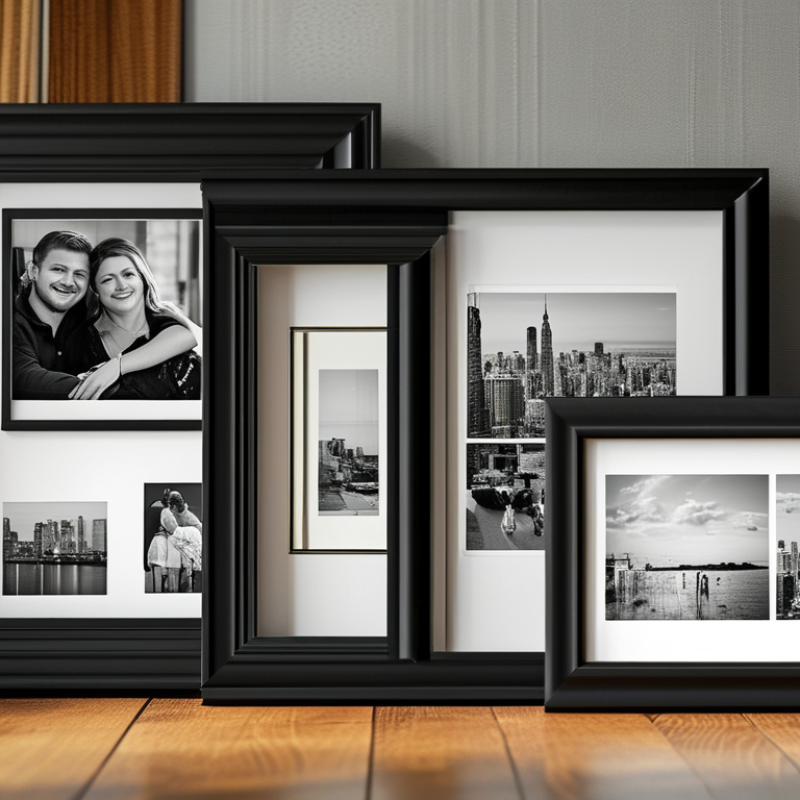
2026 Best Types of Custom Photo Frames for Buyers?

What Are Custom Photo Frames and Why Do Buyers Choose Them?

What Are Custom Photo Frames and Why Do Buyers Choose Them?

Custom photo frames are made around a buyer’s image, dimensions, style, and display needs. Options may include wood, metal, acrylic, colored mats, engraved details, and UV-protective glazing. Unlike standard frames, they can fit unusual prints, wedding portraits, children’s artwork, or a narrow hallway wall. The choice feels personal because the buyer controls both the memory and its presentation.

Demand also reflects a wider shift toward personalized products. Grand View Research reported that the global personalized gifts market reached approximately USD 28.3 billion in 2023. Its report expects continued growth through 2030. This figure does not represent photo frames alone. However, it shows why buyers value products with emotional and visual relevance. Custom framing also reduces awkward gaps around non-standard photographs. Still, personalization is not automatically better. A poor crop, weak material, or excessive decoration can distract from the image.

Tips: Measure the photo and wall space twice. Choose UV protection for bright rooms. Use acid-free backing for valuable prints. Ask for a digital preview before ordering. A thin black frame may suit a modern portrait, while warm wood can soften a family scene. Buyers should also check mounting quality, delivery protection, and cleaning instructions. In my experience, the most attractive frame is often simpler than expected. That is easy to overlook.

Which Materials and Frame Styles Are Best for Custom Photo Frames?

Choosing the right material can protect a photograph and strengthen its visual impact. Solid wood offers warmth, texture, and dependable weight for family portraits or traditional rooms. Metal frames create cleaner lines and suit modern photography, especially black-and-white images. Engineered wood is often more affordable, but its surface quality varies. Check the corners, backing, and hanging hardware before ordering.

Frame style should support the image, not compete with it. A narrow profile keeps attention on colorful prints, while a wider profile gives formal portraits more presence. Deep frames add dimension and can hold mats or layered artwork. For valuable photos, choose acid-free backing and UV-filtering glazing. I once selected a beautiful glossy frame that reflected every window in the room. It looked impressive online, but poorly placed at home. That mistake changed how I judge frames.

Tips: Match the frame’s finish with nearby furniture, but do not force an exact match. Leave space for a mat when the image needs breathing room. Measure the photo, wall, and available lighting carefully. In humid rooms, sealed materials may perform better than untreated wood. Review sample colors in daylight. Digital previews can be misleading.

How Do Buyers Select the Right Size, Shape, and Display Format?

Buyers choosing custom photo frames in 2026 should begin with the image, not the wall. Grand View Research estimates the global picture frame market reached about USD 1.9 billion in 2023, showing continued demand for personalized display products. A frame should protect the photograph and support the room’s visual balance.

Measure the visible image area first. Add 5–8 centimeters of matting when the photo needs breathing space. For a small portrait, an 8×10-inch frame often feels controlled. A 16×20-inch frame gives stronger impact above a sofa or console. However, oversized frames can overwhelm narrow walls. Measure twice.

Shape changes the mood. Rectangular frames suit documents, landscapes, and gallery arrangements. Square frames create rhythm around shelves. Round designs soften children’s portraits or informal snapshots. According to the 2024 Global Digital Overview, billions of people still create and share digital images, yet many display only a few physical photographs. The display format matters. Use a wall frame for permanence, a tabletop frame for flexible viewing, or a multi-opening frame for a family timeline.

Material, glazing, and mounting deserve practical attention. Art conservation guidance commonly recommends UV-filtering glazing and acid-free mat boards for valuable prints. Still, not every photo needs museum-level protection. That can waste money. A better choice matches the print’s value, room humidity, viewing distance, and replacement cost. I have found that buyers often choose by appearance alone. That is understandable, but imperfect. A beautiful frame can still be the wrong size.

What Customization Options Improve the Look and Function of a Frame?

Custom photo frames in 2026 do more than surround an image. The right options improve proportion, protection, and daily handling. I usually begin with the photograph’s size, room lighting, and viewing distance. A wide mat can give a small portrait breathing space. A slim border suits a detailed landscape. Mat color matters too. Warm white softens skin tones, while charcoal creates stronger contrast. Test samples beside the photo, not only on a screen.

Glazing is both visual and practical. Low-reflection glass helps in bright rooms, while lightweight acrylic works better for large frames or busy hallways. UV-filtering glazing can reduce fading, although it cannot stop every form of damage. That distinction matters. For valuable prints, acid-free mat board and archival backing provide a safer enclosure. A sealed back can limit dust, but poor ventilation may trap moisture in humid spaces. Local conditions should guide the choice.

Customization should include hardware, depth, and access. D-rings, wire, or a stand must match the frame’s weight and placement. Deep profiles can hold layered mats or small objects, yet they may look heavy above narrow furniture. Personal details, such as engraved text or a dated message, add meaning when used sparingly. I once chose an ornate border for a simple family photo; it competed with the faces. That mistake changed my rule: decoration should support the image, not perform over it. Still, taste is subjective, and a frame that feels too plain in a sample room may work perfectly in someone’s home.

2026 Best Types of Custom Photo Frames for Buyers

Customization options are rated from 1 to 5 according to their practical contribution to appearance, photo protection, display flexibility, and everyday usability.

Higher scores indicate a stronger overall improvement. UV-protective glazing and custom mat boards provide the best balance of visual appeal and long-term photo protection, while shadow-box depth and multi-opening layouts improve presentation flexibility.

How Should Buyers Compare Quality, Price, Sustainability, and Suppliers?

2026 Best Types of Custom Photo Frames for Buyers

Custom photo frames now include solid wood, recycled acrylic, metal, floating, collage, and deep shadow-box designs. The best choice depends on the image, room, and expected lifespan. A wedding print may suit warm wood, while a modern exhibition photo may need clean acrylic or aluminum.

Compare quality through material thickness, corner joints, surface clarity, hanging hardware, and print protection. Ask for a physical sample before placing a large order. Check whether the frame prevents glare and protects photographs from moisture or fading. Small details matter. I once focused on appearance and ignored weak rear supports. That mistake made installation harder than expected.

Price should include customization, proofing, delivery, packaging, and possible replacement costs. A cheaper frame can become expensive when damage occurs during shipping. For sustainability, ask about recycled materials, certified wood sources, low-odor finishes, minimal packaging, and repair options. Vague environmental claims deserve caution. Reliable suppliers explain material origins and provide clear product specifications. They should also confirm production times, size tolerances, color differences, and return procedures in writing. Request recent customer examples, not only polished catalog images. Communication is evidence. A supplier who answers technical questions clearly is usually easier to trust, although no supplier is perfect.

Before you go

Leave your projects details, and one of our team will reach out to answer any questions you may have